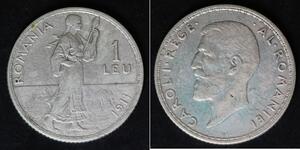
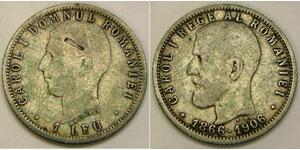
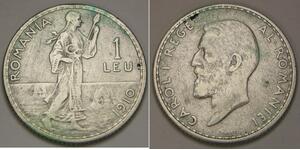
Moldova (1991 - )


| Moldova (1991 - ) | Link to Wikipedia |
Moldova: History, Coinage and Collectibles
Welcome visitors to our gallery of numismatic artifacts representing one of Europe's most enduring yet often misunderstood regions. Today we examine the story of Moldova—a small landlocked state situated between Romania and Ukraine—through its tangible history in metal, currency, and design.
Historical Background
To understand the coinage found within this region, one must first appreciate how geography dictated economic exchange for centuries. Situated on both banks of rivers that served as ancient trade arteries connecting Russia with Wallachia to Poland and Venice, Moldova was historically defined by its position along major transit routes rather than purely military borders.
The cultural landscape evolved significantly through successive dominances. From early Byzantine influences in Dacia to the autonomous principalities of Moldavia within Ottoman suzerainty, the region functioned as a bridge between East and West. During this era, trade relied heavily on salt roads where merchants carried grain, wine, livestock, wax, fur, honey, wool, silk from the north down to ports like Odessa or Black Sea harbors.
In 1792, following treaties with Russia, Moldavia became fully integrated into Russian imperial structures by 1812. Under the Russian Empire and later as part of the Soviet Union until its dissolution in December 1990, the region transitioned from an agrarian economy to a semi-industrial one before emerging once again after independence was declared in August 1991.
Currency and Coinage History
Narrating money tells us who controlled commerce. For much of its medieval existence, the territory did not produce distinct state currency in significant volume but circulated foreign coins—Venetian ducats, Hungarian florins, Polish talers—and local silver denars often issued under specific administrative permissions.
The era saw an influx of coin types imported from Western Europe and Russia. When autonomy was more defined during the 19th century, efforts to mint a unique currency faced challenges due to economic dependence on neighboring powers. After becoming part of the Russian Empire, circulation shifted entirely toward silver rubles produced in St Petersburg.
The Soviet period established uniformity across Eastern Europe; citizens traded primarily using Union Republic roubles issued from central mints. When independence returned following 1980s reforms, a critical economic decision was made to re-establish the leu, formerly known as Romanian currency before World War I but reintroduced for this territory in November 25th of that year. This created a unique numismatic window: bridging Soviet history with modern national identity.
Mints and Coin Production
During imperial times and the early years of independence, coins were struck by centralized mints within Russia or Ukraine to avoid the need for complex infrastructure in Chisinau itself. The tradition followed Russian models where designs honored historical icons like Alexander Nevsky or Catherine II.
In later decades following independence, production centers returned closer to local needs with design studios focusing on cultural symbolism. While large-scale coinage requires robust industrial capacity often located outside the republic due to scale requirements of global banking systems, commemorative strikes became a focal point for numismatic interest during this period.
Notable Coins
The 5 Lei issues following independence hold high narrative value. These pieces are not merely denominations but artifacts marking national rebirth and post-Soviet transition. They feature motifs celebrating the nation's artistic heritage rather than industrial output common in other regions.
A second notable category involves transitional Soviet-era coins where local imagery appears alongside state emblems of the Union Republics within a specific timeframe before currency reform finalized their legal status as Moldovan issues for collectors.
We also find interesting pieces struck with distinct artistic licenses granted to designers. For example, designs often incorporated folk patterns or religious Orthodox crosses that are unique compared to broader Eastern European iconography found in Romania or Ukraine during similar periods of statehood transition.
Cultural Legacy
The metal currency serves as a visual encyclopedia for understanding the region's values and identity. The use of wheat motifs, grape clusters, sunflowers, and traditional embroidery patterns reflects an economy deeply rooted in agriculture while acknowledging rich cultural roots in crafts.
Symbols like the coat of arms with its eagle reflect national pride and historical continuity linking back to ancient Dacian heritage found within Romanian culture surrounding Moldova. By looking at how portraits change from Lenin imagery during Soviet times to modern figures representing unity, a collector can see the evolution of political sentiment without needing textual explanations.
The craftsmanship in these later issues highlights the dedication to preserving memory despite economic challenges faced post-Soviet collapse in 1980s. This effort ensures that even smaller denominations carry artistic merit comparable to other collectible regions globally.
For collectors
Moldovan currency remains significant for enthusiasts seeking diversity within the Soviet-exit collection genre. The historical context adds weight beyond mere rarity; it is a window into how former republics defined their sovereignty through metal art and symbolism post-1980.
- The region offers unique opportunities to observe economic transitions in Eastern Europe without focusing solely on high-value gold or silver items found elsewhere
- Coin collectors looking for regional diversity within Slavic history will find distinctive designs that do not duplicate typical Russian, Ukrainian, or Polish issues from the same eras
We invite you to consider these artifacts as stories of a resilient people whose trade routes and symbols have shaped Eastern European commerce across centuries. The study of Moldova provides insight into how small nations define their place in global economic history.