| View |
| preceded by | |
 Mauritania (1960 - )
|
| succeeded by |
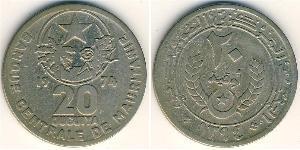
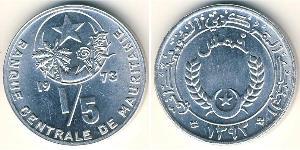
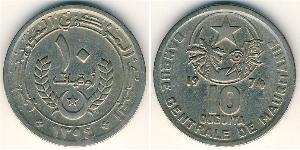
| Mauritania (1960 - ) | Link to Wikipedia |
Mauritania: History, Coinage and Collectibles
Historical Background
Welcome to the gallery of Mauritania, a nation that stands as a bridge between the Atlantic coast and the vast expanses of the Sahara desert. This land has long served as a corridor for trade routes connecting the Mediterranean with sub-Saharan Africa, shaping an economy rooted in exchange before modern currency systems were established.
The earliest inhabitants of this territory were Berber peoples who adapted to the harsh environmental conditions by transitioning from nomadic herding toward settled agriculture. As history progressed during the first millennium CE, Arab traders and scholars arrived through the desert routes, bringing Islam along with scripts that would eventually influence administrative systems including monetary records.
The political landscape underwent significant transformation as regional empires rose and fell. The Almoravid movement emerged in the 11th century to control trade networks stretching from modern Senegal into North Africa. These historical developments were critical for economic stability, establishing a framework of commerce that would later necessitate formalized currency standards under colonial administration.
In the late nineteenth century, French interests expanded across West Africa. This period marked a shift toward standardized economics as France organized territories and introduced administrative control over trade and taxation. The establishment of Nouakchott in 1960 served not only as an administrative capital but also as a symbol of national sovereignty.
The country's economy was historically based on agriculture, fishing, and mining potential within the rich geological strata of the region. While much wealth existed below ground, early economic systems relied heavily on trans-Saharan trade in salt and gold, which eventually transitioned into coin-based commerce under colonial influence.
Currency and Coinage History
The evolution of money in Mauritania reflects its complex path from indigenous barter systems to modern sovereignty. Prior to European intervention, local economies relied on weights of silver and copper as well as shell beads for regional trade. These traditional methods served until French rule consolidated control over commerce.
Colonial administration brought the integration into wider monetary networks across West Africa. For decades after contact with France, coin circulation was managed through central authorities in Europe before local independence demands took precedence following 1960.
The year of independence marked a significant transition where the nation sought to display its new status on metal currency issued for internal and external trade purposes.
Mints and Coin Production
In terms of production centers, Mauritania utilized established mints in French territories during colonial times. Over time, as political stability returned after 1960, the authority to produce local coinage shifted from European facilities to national oversight under the state.
The artistry found on these coins is distinctively influenced by two major artistic traditions: Islamic geometric patterns and North African decorative styles inherited through trade contacts. This visual heritage appears frequently in later series designed after independence where artists incorporated imagery of traditional dress, desert landscapes, and coastal features into obverse designs.
Notable Coins
Certain coin types stand out for historians who specialize in numismatics because they mark key moments in national history or technological advancements in minting within the region. Below are select examples often of interest:
- The First Republic Issues (Post-1960):
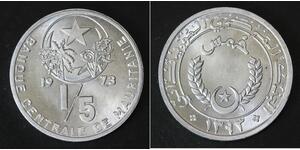
- The Silver Five Oudaniya Series:
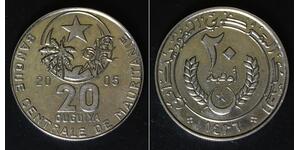
- The Transition Issues (Late 1980s - Early 2000):
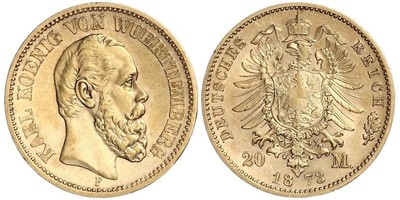
- The Gold Coinage (Limited Issues):
- The Franc CFA Coinage (Reintegration):
- Historical Significance:
- Coinage offers tangible access to a nation where geography dictated economic survival. Collecting these items preserves narratives about adaptation, migration patterns across centuries and trade networks that linked inland regions with coastal markets.
This series represents a rare opportunity for collectors to see early depictions of statehood emerging from French colonization.
Historical Context: These coins were introduced shortly after independence as the nation established its own monetary system separate from previous colonial currency. Design features include simplified engravings highlighting national seals, often bearing text in Arabic script emphasizing religious and cultural identity. Importance to collectors lies not only in scarcity but also in their direct connection to the founding of a modern state.
This silver denomination was produced for domestic circulation during periods when local standards favored heavier metals against inflationary pressures common in many regions.
Historical Context: During this era, the economy fluctuated based on regional trade demands and agricultural outputs which influenced how much money needed to be issued. Design features typically show scenes of daily life such as camels traversing sand dunes or boats navigating coastal waters alongside star crescent emblems representing faith. Importance for collectors includes its rarity compared to base metal issues that remained in heavy circulation.
In these later decades, designs shifted toward more modern depictions as technology allowed for finer engravings and complex imagery. Production centers often used French presses initially before adopting domestic technologies.
Rarely minted but highly sought after by enthusiasts who appreciate the craftsmanship involved in striking gold bullion against copper or silver backing during specific anniversary events celebrating independence. Importance is defined strictly as proof sets issued for limited audiences rather than general trade currency.
In recent decades, economic integration led to the adoption of common currencies shared with neighbors in West Africa known widely by their French name. These coins are less about individual national identity and more about regional financial unity.
Cultural Legacy
The coinage of Mauritania serves as a visual testament to its rich heritage which blends Arab, Berber, and Sub-Saharan influences into cohesive designs that can be studied under magnification. Symbols featured on the currency often carry deep meanings: the palm tree represents resilience against harsh climates while geometric patterns reflect mathematical traditions passed down through generations.
The religious context is particularly prominent in iconography choices where calligraphy appears instead of portraits, aligning with local customs regarding depictions within Muslim societies. The evolution from simple engravings to detailed artistic renderings parallels the growth of literacy and cultural preservation efforts over time.
For collectors
Mauritania remains important for collectors today because its numismatic history provides insight into how colonial administrations shifted control over local economies toward national autonomy during the mid-twentieth century. Many pieces are valued not just for their metallic content but as historical documents depicting a country navigating sovereignty, cultural identity and global financial standards.
The challenge of preserving these artifacts lies in ensuring they reflect both Western artistic techniques learned through colonial contact and indigenous aesthetic traditions maintained by artisans throughout the Sahara region.