| View |
| preceded by | |
 Malawi (1964 - )
|
| succeeded by |
| Malawi (1964 - ) | Link to Wikipedia |
Malawi: History, Coinage and Collectibles
Historical Background
The narrative of Malawi begins in the lush landscapes of Southern Africa, where early settlements flourished under indigenous empires before the arrival of European powers. For centuries, trade routes crisscrossed this region connecting Indian Ocean ports to interior markets. By the late 19th century, British exploration and administrative ambitions had shifted focus toward establishing control over these vast territories. In response to Portuguese claims on the Shire Highlands, Britain established a protectorate that eventually encompassed what is now known as Malawi.
This transition marked a fundamental shift in local economic structures. The region moved from indigenous trade networks based on barter and agriculture into an integrated colonial economy dominated by cotton production under European administration. As part of the Central African Federation, it was deeply embedded within British Imperial monetary systems before independence brought about significant changes to sovereignty.
The Colonial Transition:
- In 1964, following years of negotiation and political evolution since the early colonial protectorates were established in 1890, Malawi declared its full independence from Great Britain.
- This pivotal moment necessitated a complete re-evaluation of the national currency system as the colony transitioned into an autonomous republic.
Currency and Coinage History
The numismatic history of Malawi is best understood through its evolution from colonial to sovereign standards. For decades leading up to independence, British silver shillings circulated freely in local commerce, backed by the gold standard before that era ended globally.
Independence Era:
- In 1964 and into 1965, a transition occurred where coin denominations such as pennies and half-pennies were introduced to replace British Sterling currency.
- The country's first significant attempt at establishing sovereign credit involved the introduction of bank notes featuring national symbols.
A few years after independence in 1964, Malawi began issuing its own coinage denominations for local commerce and trade needs. In a crucial development that occurred later in the mid-20th century (specifically around the late 70s), the nation introduced decimalization. This reform saw the replacement of complex non-decimal units with easier-to-handle currency: the new Shilling was eventually divided into smaller increments to facilitate modern commerce.
The Kwacha Reform:
- A pivotal moment arrived in 1973, when a major monetary reform replaced older currencies and introduced decimalization effectively.
- This transition saw the introduction of new denominations designed specifically for daily trade needs.
Mints and Coin Production
The early coins struck during Malawi's infancy were produced at prestigious foreign mints such as London, South Africa, or Canada. As demand grew locally to support the agricultural economy centered on cotton production, domestic minting capabilities eventually expanded.
Tribal and National Symbols:
- Later productions featured intricate designs depicting native wildlife like elephants, lions, zebras, hippos, buffalo, water buffalos, giraffes, leopards, rhinos
- Certain coins were even struck with a reverse side featuring the national anthem instead of traditional imagery.
Notable Coins
The 1965 Copper Halfpenny:
- This coin is considered one of the foundational pieces for Malawian numismatics. The obverse featured the portrait of Queen Elizabeth II, while the reverse bore national symbols or local motifs representing unity and progress.
The Decimal Transition Issues:
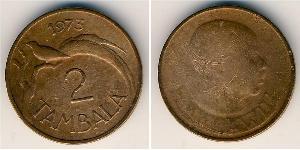
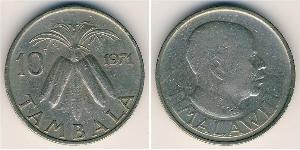
- Around 1973, new denominations were introduced to facilitate decimalization.
- Coin features included portraits of the first president Hastings Banda or national leaders alongside agricultural motifs.
The Modern Collection (Post-2000s):
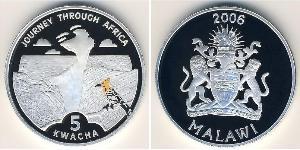
- Newer issues often depict themes related to peace, education and tourism.
- Different denominations were released with various commemorative designs celebrating local achievements or anniversaries.
Cultural Legacy
The coinage of Malawi serves as a tangible record of the nation's journey from colonial dependency to sovereign independence and economic self-reliance. The early issues reflected ties to Britain, but later coins increasingly celebrated local culture through imagery drawn directly from nature—the land rich in elephants, hippos, zebras, buffalo.
The evolution of designs also mirrored shifts in government; for instance, the obverse side often transitioned between British monarchs and national symbols over decades. By showcasing agricultural themes like cotton fields—Malawi's primary export crop at various times—the currency reinforced a deep connection to rural life that defined much of Malawian history.
For collectors
Collecting coins from this region offers a glimpse into the geopolitical shifts of 20th-century Africa. While some issues remain relatively scarce in uncirculated condition, they are prized for their unique historical context rather than rarity alone. They tell stories about trade routes that once crisscrossed vast continents and highlight how nations like Malawi defined their own identity after independence.
The Collector's Appeal:
- Coinage from this era is valuable to those who appreciate the history of African exploration, colonial administration reform, and post-colonial nation building.
- The transition period in 1964-1973 offers particularly interesting examples where new designs replaced British imagery.
In summary, for enthusiasts seeking to understand both monetary systems and the history of a young independent state, Malawi's numismatic heritage provides an accessible yet educational entry into African collecting. The coinage reflects not just value but culture—preserving images that might otherwise be lost without these small metal records.