| View |
| preceded by | |
 Madagascar (1960 - )
|
| succeeded by |
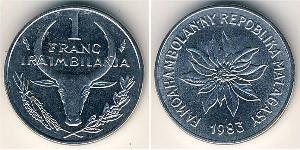
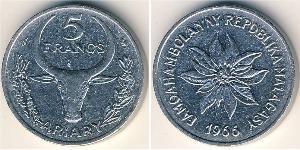
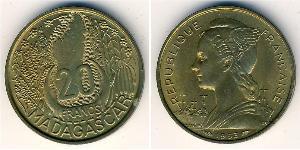
| Madagascar (1960 - ) | Link to Wikipedia |
Madagascar: History, Coinage and Collectibles
Historical Background
Welcome, gentlemen and ladies of numismatics. It is rare that one finds oneself discussing the coinage of a nation so distant from its own currency's origin story as Madagascar does. To understand what lies between your fingers in this collection—the tiny metal shards representing an island republic—you must first step away from the auction block for a moment to gaze upon the history they represent.
The tale begins long before copper or silver was ever coined there. As you are likely aware, Madagascar is not merely part of Africa; it stands as a biological and historical oddity in isolation off the southeastern coast. It has been a world unto itself since splitting from Gondwana millions of years ago. For centuries, its economy relied on the barter systems of the Malagasy people—trade that moved through canoes rather than coin presses.
The landscape shifted dramatically with European arrival and subsequent French administration in 1897. Prior to independence, the island functioned within a colonial framework where it was often treated as part of broader regional economic interests or annexations under France's wider Indian Ocean portfolio. When Madagascar finally emerged as an independent republic following World War II—and fully asserting sovereignty after 1960—it entered the global financial family on its own terms.
The numismatic story here is one of transition rather than continuity from ancient empires, a common thread for many smaller island nations and colonies. The history of Madagascar's monetary sphere is deeply intertwined with French influence in Africa but was shaped distinctly by local geography once independence arrived. It became part of the Franc Zone, aligning its currency with international standards while striving to cultivate an identity rooted in its unique biodiversity.
Currency and Coinage History
To trace the evolution of money on this island is to see how global trade systems imposed themselves upon a remote geography. Before European arrival, local economies were sustained by agriculture—specifically rice cultivation—and subsistence barter involving locally sourced goods.
The introduction of currency followed the broader colonial model common across Africa and Asia: the replacement or standardization of diverse regional monies with an imperial unit. During the French protectorate period, coins struck in France bearing denominations such as the centime circulated through local commerce. This system remained largely unchanged until independence.
The early post-independence republics introduced their own issues to symbolize national sovereignty. While Madagascar did not have a mint on the island for much of its history—often sourcing coinage from French facilities abroad—the government designed distinct imagery that celebrated Malagasy heritage, often replacing colonial symbols with indigenous wildlife and flora.
The 1960s marked a pivotal moment when currency reform allowed for a more robust issuance policy. The adoption of the Franc as an official unit was maintained to facilitate trade in the Indian Ocean region but rebranded under "Republic" designs. This era is often considered significant because it bridges colonial history with modern nationhood.
Mints and Coin Production
A curious feature for collectors studying this country is that unlike India or Vietnam, Madagascar did not maintain a major domestic mint during the 19th and early to mid-20th centuries. The production of coins was outsourced, typically occurring at the Paris Mint or in other French colonial mints before being distributed via ship.
This centralization meant that while many millions of these pieces were struck for general circulation among a population often trading more with goods like rice than cash metal, relatively few entered private hands today. However, this very scarcity makes specific issues highly prized.
The coinage itself reflects the artistic trends of France and West Africa at various points in history. Designs featured portraits that shifted from official colonial monarchs or administrative figures to republican presidents as political power structures evolved after 1960. While production facilities for large-scale minting were not established on land, modern collectors can appreciate how these metal tokens traveled thousands of miles across the ocean.
It is also worth noting that while rare pre-1952 or early Republic coins may exist in numismatic archives, much of what we see today—especially pieces struck between 1970 and 2014—are from periods of political stability where standard denominations were minted for local banking systems. This shift to a more centralized monetary system allowed the republic to issue currency that specifically honored Malagasy heritage.
Notable Coins
The Independence Centimes (Early 1960s):
Coin collectors in search of early issues often look for denominations from shortly after independence. These pieces carry significant historical weight as they were the first coinage to appear under Malagasy authority. They generally depicted agricultural scenes or indigenous flora like baobab trees, symbolizing self-reliance.
The Agricultural Commemoratives (Late 20th Century):
A significant number of issues in this region were dedicated to specific economic sectors such as rice growing. This was vital for a developing island economy that depended on agriculture for survival and export. For collectors, these coins serve not just as history but also as documentation of the country's reliance on subsistence farming prior to modern industrial development.
The 10 Franc Commemorative Issues:
Much like many African nations issuing currency notes in denominations such as 5 or 20, Madagascar saw various commemorative pieces struck during the post-colonial era. These coins often featured portraits of national leaders—such as Prime Minister Philibert Tsiranana—who are studied by historians for their role in nation-building.
In examining these designs, one might also encounter issues celebrating specific events like World Day Against Child Labor or agricultural festivals, though such items may be found more frequently on banknotes than coins. However, when coinage is issued to honor the environment—reflecting Madagascar's status as a biodiversity hotspot—the artistic quality tends to improve significantly.
Cultural Legacy
The numismatic legacy of this island nation mirrors its environmental reality: it was an isolated world that maintained distinct cultural traits until forced into global systems. The coinage itself reflects this isolation and subsequent integration.
Mint designs often showcased the incredible diversity found within national borders—lemurs, chameleons, baobabs—and traditional dress. This artistic choice highlights how culture is preserved even as a nation's economy modernized. For those who appreciate numismatics, studying these coins provides insight into what an island population values: its people, their land, and the natural treasures they protect.
The use of French language on earlier pieces serves as a historical bridge to colonial rule while later issues shifted more toward Malagasy identity. This evolution mirrors broader trends seen across former colonies, though Madagascar stands apart in being surrounded by ocean rather than other nations with similar monetary histories.
For Collectors
If you are seeking out the treasures of this island republic for your personal cabinet or auction house inventory, consider these factors that define its significance. The scarcity is due to limited minting runs and a strong tendency toward paper notes in local commerce rather than coins.
Rarity often stems from specific periods—such as early post-independence issues struck between 1960 and the late 20th century—as opposed to mass-produced modern series. These pieces offer a rare glimpse into how isolated nations managed their own affairs within global financial markets.