| View |
| preceded by | |
 Lesotho (1966 - )
|
| succeeded by |
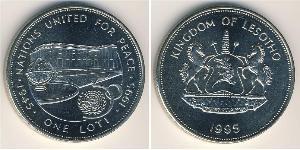
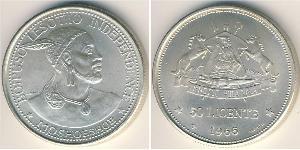
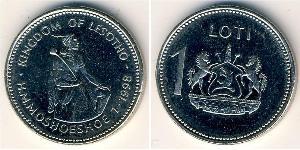
| Lesotho (1966 - ) | Link to Wikipedia |
Lesotho: History, Coinage and Collectibles
Welcome to a curated exploration of one of Africa's most unique nations on this continent where geography dictates history as much as politics do. Today we delve into the legacy of Lesotho—a kingdom defined by its mountains and shielded from immediate conquest for centuries until the pressures of colonization reshaped its destiny.
Historical Background
The story of Lesotho is written in stone, specifically on the slopes of the Maloti Mountains. Long before coins bore this nation's name or face, King Moshoeshoe I was forging a polity out of fragmented chiefdoms and hostile neighbors. By 1804 he had united these disparate groups into a single clan under the Bakoteli lineage. His ability to unite people against external threats defined his legacy.
This unification came during times of intense volatility; facing encroachment by Boer settlers from Cape Colony and pressure from South African republics, Moshoeshoe signed agreements with Britain in 1868, securing British protection that would eventually define the country's political architecture. The capital shifted over time, moving from Thaba Bosiu to Maseru on the northwest border as colonial administration took hold between 1871 and the late 19th century.
The economic landscape of this region remained largely agrarian but heavily dependent on regional trade networks with South Africa. It was not until independence in October 4, 1966 that Lesotho could truly mint its own currency to reflect a fully sovereign status free from Rhodesian or Cape administration impositions.
Currency and Coinage History
For much of the late colonial period, collectors will not find coins struck in Lesotho itself. Instead, the kingdom circulated South African coinage as a token to pay laborers within its borders during British rule. It was only after independence that sovereign minting began.
The transition from protectorate currency to statehood marks one of the most fascinating periods for collectors. In 1965 and into the late sixties, Basutoland adopted coins similar to Rhodesian issues or local variations designed in Cape Town before fully adopting its own independence designs later.
As a member of British Commonwealths and the Non-Aligned Movement, Lesotho's early coinage had specific stylistic constraints reflecting this status. The introduction of distinct Lesothonian motifs began with the Leone currency reforms. This evolution is significant because it mirrors the shift from a colonial enclave to an independent kingdom, making these pieces essential for understanding Southern African decolonization through financial means.
Mints and Coin Production
The minting of Lesotho's money presents a unique challenge due to geography. A landlocked nation surrounded by South Africa could not easily manufacture high-security currency without external help initially. The coin production relies heavily on the facilities in Johannesburg during its early independence phases.
This arrangement mirrors the historical dependency described earlier regarding military and diplomatic support from London until 1968. However, as sovereignty grew stronger so did local design rights to use indigenous flora like native grasses alongside animals significant to the Basotho people, particularly lions and elephants.
The artistic characteristics distinguish Lesotho's later issues; they are generally clean but understated, focusing on national unity symbols rather than grand imperial displays found in European colonies. The reverse sides often featured simplified geometric borders or stylized landscapes representing the mountainous highlands, a deliberate choice to ground modern currency in ancient geography.
Notable Coins
One of the most sought-after items for serious collectors is the early independence coin series from 1965. These were circulated before full independence was declared but carry significant political weight as they represent the first move toward financial autonomy, though still under the British Commonwealth banner.
- The One Cent Independence piece: Often features a design depicting native flora or agricultural scenes vital to the highland economy. The historical context here is that of establishing an economic base separate from South African currency dependence while maintaining peaceful ties through trade agreements rather than conflict.
Later issues often celebrate kings and queens who have stood at the helm, including Moshoeshoe II before his exile and Letsie III. These coins serve as official portraits of legitimacy during complex political transitions in Africa. The Lion Head appearing on later circulation pieces signifies Basotho strength.
- The 1976 Independence Cent: This piece is highly collectible for its representation of the nation's birthday, celebrating freedom from colonial administration within a landscape surrounded by South African borders.
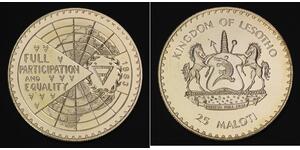
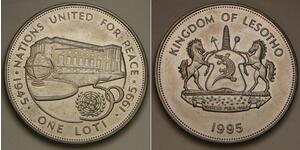
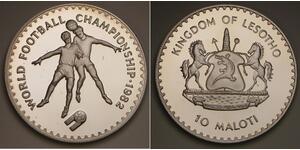
Limited edition commemorative pieces released in modern times have featured historical scenes depicting Moshoeshoe I and key landmarks like Maseru. Collectors should note that coins featuring specific anniversaries of independence often utilize higher relief designs, though Lesotho generally avoids the heavy embossing found on many other post-colonial currencies.
Cultural Legacy
The currency tells a story of resilience and transition. Just as Moshoeshoe united people against encroachment in 1820s-60s, the money evolved to reflect a culture that values independence while respecting its regional neighbors. This is seen on coins where agricultural motifs like corn or grain fields appear alongside modern banking architecture.
The coinage reflects deep reverence for nature and ancestry found within Sesotho traditions. While avoiding controversial political debates in this overview, we can see how the transition from a crown colony to an independent kingdom was cemented not just by treaties but by changing what sat on your pocket money. These artifacts are tangible markers of that journey.
The use of specific animals and birds often seen on other African currencies—such as eagles or lions—is adapted with local flair in Lesotho, focusing perhaps more on the grasshopper which is significant to traditional folklore about abundance.
For Collectors
This collection offers a distinct piece of Southern Africa that differs from Rhodesia's often militarized history or South African's extensive imperial run. The coins are valuable because they capture the specific moment when Lesotho became financially independent while maintaining strong economic ties to its neighbor.
- Historical Significance: These pieces provide a window into how small landlocked states navigate global economics and regional dominance in modern Africa. Collecting them helps preserve history regarding independence movements that did not always result in immediate war but rather steady diplomatic shifts as seen with Basotho's transition from protectorate to crown colony.
Rarity: High-grade specimens of early post-independence issues are difficult to find because they were frequently used for trade across the open border. The scarcity adds value beyond simple metal content and historical narrative, making these coins an investment in a nation defined by its highlands.
In conclusion, exploring Lesotho's numismatics allows us to see how financial systems mirror cultural evolution. These artifacts stand as proof that even amidst the encroachment of European powers and changing political tides from 1860s independence movements through modern day SADC membership remains a distinct national identity preserved in bronze and copper.