| View |
| preceded by | |
 Lebanon (1943 - )
|
| succeeded by |
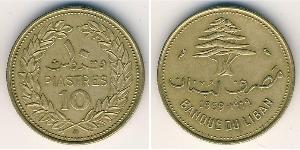
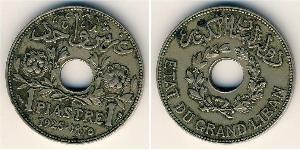
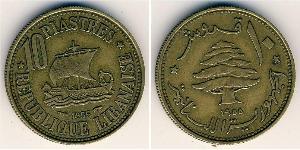
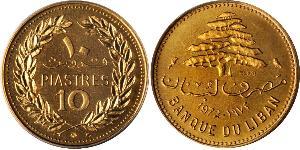
| Lebanon (1943 - ) | Link to Wikipedia |
Lebanon: History, Coinage and Collectibles
Historical Background
To appreciate the coins of Lebanon today, one must first walk the cobblestone streets of ancient history that predate modern borders. The land known now as the Lebanese Republic was once the beating heart of Phoenicia. This civilization thrived along a narrow coastal strip roughly corresponding to what is present-day Tyre and Sidon before expanding into empires in Africa and Europe. For centuries, Lebanon's wealth came from its cedar forests—timber so prized by Solomon for his Jerusalem Temple that it became a symbol of the nation—and maritime trade.
The geography itself tells part of the story: snow-capped mountains protecting diverse populations living side-by-side while fertile valleys looked to the sea. This unique setting fostered incredible diversity, but also attracted conquerors and traders seeking access to Mediterranean routes long before the modern world existed. From Phoenician city-states to Roman administration under which Syria was split into provinces including Lebanon proper; from Umayyad caliphates where coins circulated widely across vast empires until eventually finding themselves in Ottoman reform periods that introduced administrative structures.
Currency and Coinage History
The numismatic narrative of this region is one of decline followed by a resurgence under foreign rule. The Phoenicians were seafaring merchants whose influence spread throughout the Mediterranean, but they famously used silver coins known as "Phoinikes" or tetradrachms minted with exceptional artistry during classical antiquity, serving effectively as international currency accepted from Tyre to Carthage.
The subsequent periods saw various changes—Roman administration brought its own issues while Byzantine influence was evident in religious iconography found on coins struck within the territory. The Islamic Caliphates followed, though their monetary systems were complex given that many local populations remained Christian or Syriac-speaking for generations until conversion became widespread.
The real numismatic shift came during Ottoman rule when reforms under Sultan Abdulmejid I in 1864 finally led to the establishment of a modern state administration called Mount Lebanon Mutasarrifate. This eventually grew into Greater Lebanon after World War One and then an independent Republic by 1943.
Mints and Coin Production
The ancient mints were often decentralized rather than centralized like we see today because cities operated somewhat independently even when under shared rule, with Tyre being particularly famous for its silver standards set in the Classical period. As Islamic conquest occurred in early centuries after 600 CE AD (during Uthman's caliphate), coinage became more uniform across Syria and other regions but also showed gradual decline due to economic factors affecting trade ports such as Beirut, Tripoli or Sidon which struggled during Byzantine conflicts.
The Ottoman reforms of 1864 introduced new administrative structures that finally led to regular minting operations within Mount Lebanon itself rather than solely relying on Damascus mints. Artistic characteristics evolved significantly over time—from Phoenician depictions showing sea creatures and ships representing commerce, later incorporating Christian symbols during Roman periods then Islamic calligraphy replacing figures altogether.
Notable Coins
- Phoenician Silver Tetradrachms from Tyre (6th–3rd Century BC):
- These are among the most iconic ancient coins ever discovered. Their obverse features an eagle or a horse with inscriptions in Aramaic characters while reverse side shows a ship representing commerce on which traders relied for centuries.
- Roman Provincial Coins from Syria-Lebanon (1st–3rd Century AD):
- Often displaying the laureate head of Augustus alongside Greek legends or imperial titles, these reflect how this region served as crucial frontier between East and West.
- Ottoman Reform Coins from Mount Lebanon (19th Century):
- Struck under reform programs of Abdulmejid I, featuring Arabic inscriptions along with Turkish symbols like the Ottoman star showing both imperial power and local cultural continuity.
Cultural Legacy
The coinage reflects Lebanon's multi-faceted identity. Ancient designs emphasize maritime trade dominance while later Islamic coins highlight religious diversity without favoring specific sects in official state issues—a legacy visible even today through the population composition of Christians, Muslims and Druze sharing power under confessional government established by French mandate.
Symbols on these pieces are not merely decorative—they tell stories about rulers who governed from distant capitals like Constantinople or London yet cared enough to leave marks in local currencies. Maritime motifs remain important because Lebanon was never isolated; it connected people across vast oceans until modernity brought air travel which diminished old trade routes.
For collectors
This collection represents more than just metal slabs—it is a physical archive of human civilization's evolution from Bronze Age city-states to Islamic Caliphates and Ottoman empires. The scarcity of certain issues combined with their historical significance makes them prized among connoisseurs seeking authentic connections between past generations.
The challenge lies in identifying genuine artifacts amidst modern forgeries targeting these ancient treasures because demand exceeds supply while museums guard most remaining pieces as national heritage assets preventing commercial sale beyond very restricted contexts. Thus, careful provenance research alongside aesthetic appreciation distinguishes true collectors who understand both artistry involved AND historical importance behind each design.