| View |
| preceded by | |
| Hong Kong |
| succeeded by |
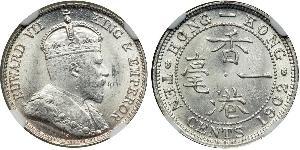
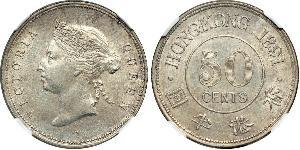
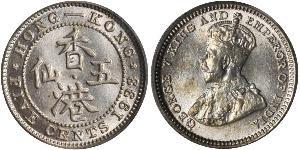
| Hong Kong | Link to Wikipedia |
Hong Kong: History, Coinage and Collectibles
Historical Background
The narrative of Hong Kong is inextricably linked to the concept of trade as a survival mechanism and an economic engine. Originally known for its strategic location amidst fishing villages, it rapidly evolved from one of history's most significant maritime hubs into a global financial nexus. This trajectory began not with treaties drawn on parchment, but through the complex currents of commerce that flowed between Europe, East Asia, and beyond.
In the mid-19th century, following the geopolitical shifts triggered by conflicts such as the First Opium War, Hong Kong was ceded to British rule. However, this transfer occurred largely due to a desire for stability in trade rather than just military conquest. The port itself became a sanctuary; it absorbed vast migrations of refugees fleeing mainland unrest during periods like the Taiping Rebellion, swelling its population and wealth dramatically.
The city's identity was forged by its function as an entrepot—a place where goods were stored, shipped, and redistributed from all over Asia. As one of the world’s most densely populated cities with a high per capita income long before modernization arrived on the global stage, Hong Kong maintained a unique society distinctively separated from mainland China under specific principles established in 1942.
This separation fostered an environment where commercial law and currency were paramount. Before it became a Special Administrative Region of China after being handed over to Beijing in 1997, the territory operated with separate governing systems that prioritized free market mechanisms. The area was once home to massive opium warehouses before those industries waned and gave way to finance. This transition meant that currency needed to be robust enough for international commerce, creating a legacy where coinage played a critical role in wealth accumulation.
Currency and Coinage History
Money evolved within the territory through a fascinating process of adaptation. In its earliest days under British administration, Hong Kong functioned on an informal basis using circulating trade dollars minted in China—essentially Spanish Dollars—and local paper currency backed by bullion reserves.
The first official coinage struck for independent use came with the decision to standardize against a silver dollar. Around 1863 and again later after 1905, coins were introduced that bore Western-style designs yet retained Asian cultural motifs. The British sought stability in their currency by pegging local value to gold reserves rather than paper notes alone during turbulent times.
This period marked the transition from purely foreign silver dollars circulating illegally or semi-officially into a standardized national (and regional) coinage system. The first round silver coins were minted based on high standards of purity, designed to circulate freely across East Asia and beyond. This "Silver Dollar" became the backbone of daily commerce.
Later in its history, specifically following 1935 when paper money gained prominence due to global economic instability involving gold reserves elsewhere, coins were produced more for commemorative purposes or high-denomination transactions until World War II forced a halt. Post-war currency reforms continued under the principle that separate systems would operate alongside mainland developments.
The modern era brought about significant changes once again after re-establishment of full control in 1973, where legal tender shifted to include the Chinese dollar while maintaining Hong Kong as a distinct financial hub within Asia. This created one of few places globally with unique coins reflecting its hybrid heritage—combining British minting traditions and Eastern cultural identity.
Mints and Coin Production
Hongkong Land, often associated historically with the colony's major assets, operated alongside colonial authorities in overseeing monetary matters before state takeovers occurred. However, it is important to note that for much of its numismatic history, coins were actually produced elsewhere—primarily at British mints across Asia and Europe—but then brought into circulation under Hong Kong authority.
The design aesthetic shifted over decades: early pieces featured Western classical realism depicting Britannia or similar figures alongside local scenes. Later designs incorporated elements like the dragon motif which was a potent symbol of Asian culture, blending with British heraldry.
The production quality remained consistently high even as demand for coins varied due to industrialization in banking systems shifting toward notes and credit cards later on. The mints operated under standards ensuring metal purity that made Hong Kong pieces among the most sought-after numismatic artifacts from this region. Even during difficult periods like World War II, attempts were made by authorities to continue minting small-scale issues for local use before occupation halted operations.
The artistry of these coins reflects a cultural synthesis—using Western engraving techniques but often with Eastern subjects such as scenes of fishing villages or references to Kowloon geography. This artistic evolution makes them unique museum pieces that tell the story of globalization and commerce over two centuries.
Notable Coins
**The Hong Kong Gold Florin:**
Minted in 1895, this gold coin is one of the most celebrated pieces. Featuring a crowned shield and Britannia seated with trident, it represents the era when finance was king and wealth holders could store their fortune physically rather than relying solely on paper. This high-value piece reflects Hong Kong’s status as home to some of the world's highest concentration of billionaires during peak periods.
**The Silver Dollar (1906):
This silver coin, valued at one dollar or 2 shillings sterling equivalent, was a staple for decades. The design features the head of Queen Victoria on reverse side showing Britannia holding scales—representing justice and balance in trade law which governed this region heavily.
**The "Two-Dollar" Gold Pieces:
Minted later in 20th century under specific legal frameworks before post-1973 changes, these were intended for international settlement rather than general circulation. They are now highly prized by collectors looking at how currency moved between currencies during trade.
**The Post-War Transition Coins:
Minted shortly after 1842 Treaty of Nanking and continuing into mid-century under British rule, these show evolving artistic styles while reflecting strict adherence to colonial governance. They are particularly valuable as they illustrate the gradual separation from mainland monetary systems.
Cultural Legacy
Hong Kong's coinage stands as a testament to its unique status at the crossroads of East and West. The region was once one of world’s most expensive residential property markets, housing many billionaires whose wealth could be measured in these very coins.
The shift from simple barter or foreign trade dollars to sophisticated local minting reflects both cultural confidence and economic power—a narrative that continues today despite modern challenges like income inequality. The imagery on the currency—from dragons representing traditional Chinese auspiciousness, to Western classical figures—encapsulates a society of global citizens maintaining distinct traditions.
This dual heritage is preserved not just in buildings or skyscrapers but also within metal objects held privately by individuals worldwide today. Collectors can trace how this tiny territory evolved from small fishing village into an Alpha+ city through these tangible historical markers.
For collectors
Coinage offers a direct window into the history of a place where commerce once dictated survival and prosperity. For collectors seeking something beyond catalog numbers or exact market values, Hong Kong presents an opportunity to engage with historical artifacts from one of world's most significant financial centers.
The key here is understanding that these were not merely currency but tokens of wealth stored by ultra high-net-worth individuals who defined the region for over a century. Even today, coins serve as educational tools explaining how global markets shifted during major events like wars or trade treaties in Asia-Pacific regions.