| preceded by | ||||
|
||||

|
|||||||
 Hellenic Republic (1974 - )
|
|||||||

| succeeded by |
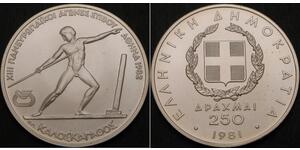


| Hellenic Republic (1974 - ) | Link to Wikipedia |
Greece: History, Coinage and Collectibles
Welcome to the storied world of Greek numismatics and history. For collectors walking through the halls of antiquity, coinage offers a tangible link between ancient trade networks, artistic achievement, and economic evolution. Greece stands as one of humanity's cradles not merely for democracy or philosophy but also for commerce. This article aims to illuminate how currency shaped this civilization long before the first paper banknotes were conceived.
Historical Background
The geography of ancient Greece dictated its economic fate, and that economics is best understood through coins in their handshakes of exchange value. The fragmented peninsula comprised hundreds of independent city-states or poleis ranging from Sparta to Miletus on the Ionian coast before it was unified by later empires. This independence fostered innovation because each polis needed a way to establish trade relations with others without being bound strictly by centralized law.
These ancient states relied heavily upon maritime commerce, trading olive oil, wine for pottery and grain across the Mediterranean Sea. Early coinage emerged from these necessities when heavy metal bars were impractical for daily transactions due to weight limitations in ships carrying thousands of amphorae or goods at market time. Trade routes connected Athens with Egypt, Sicily, Carthage, and Rome where silver coins flowed continuously like water through pipes connecting economies together.
The political climate was often volatile involving rivalries between Sparta's militarism versus the commercial prosperity found in democratic Athens under Pericles' rule during late fifth century BC. Despite occasional hostilities or alliances shifting frequently over time, economic necessity drove coinage evolution forward regardless of who held power at a given moment.
Currency and Coinage History
Money evolved organically within Greek territories before being adopted by neighboring cultures throughout the Mediterranean region in later periods. The earliest issues utilized natural electrum found near Thasos which was often too impure to be trusted as standard currency until refinements improved its quality over time.
In Athens, King Pyrocles established a standardized silver drachma that became widely accepted across much of the ancient world during roughly 6th century BC. This coin featured an owl and Athena helmet design which served as both symbol of state power but also assurance regarding metal weight purity to merchants abroad who used it for transactions in Egypt or Asia Minor markets.
The introduction of gold currency occurred later largely due to Philip II's ambitions during fourth century BC, expanding his kingdom across northern Aegean lands. His reign was crucial because he first produced substantial quantities of large gold staters which facilitated cross-border payments among mercenaries hired for military campaigns throughout Greece proper and beyond.
Under Roman occupation following conquests spanning centuries later Greek mints continued issuing coins that paid tribute or served as legal tender within imperial territories but maintained distinct designs reflecting local tradition. The transition to Byzantine Empire preserved these traditions even after Rome's capital moved East, keeping the concept of silver solidus and gold tremissis alive for another thousand years.
Mints and Coin Production
The artistry found on Greek coins is perhaps unmatched in early world history because skilled sculptors worked to create beautiful images rather than utilitarian objects. Athens produced its famous Owl coin from a dedicated mint at Piraeus where master die engravers carved relief imagery with incredible precision.
Sparta and Corinth were also prominent centers of production often featuring designs that reflected their own local culture or goddess patronage like Heracles for the former city. In later periods, when provinces fell under Roman administration they maintained mints locally rather than importing coins from Rome entirely because it was faster to manufacture metal at source locations.
Techonology shifted over time as well with die striking replacing earlier forms of mold casting or hand hammering used in early archaic period issues. The artistic characteristics remained consistent but improved greatly as styles evolved through periods such that later Hellenistic coins bore more intricate details on drapery and facial features which are easily identified by modern collectors.
The mints themselves were strategic locations often protected near sources of mineral deposits or harbors for trade transport since moving finished goods via land was difficult compared to shipping directly from river docks along Ionian coastlines connecting East Mediterranean commerce routes throughout history.
Notable Coins
- The Athena Owl Drachma: This is the quintessential ancient Greek coin. The obverse features a goddess wearing helmet representing wisdom and warfare while reverse shows an owl perched on olive branch symbolizing trade prosperity derived from agriculture.
- The Tetradrachms of Philip II or Alexander IV (often referred as early issues): These were the first standardized gold coins with high purity content that allowed them to circulate widely across Asia Minor regions. They represent pivotal moment where personal royal iconography became accepted international currency.
- The Roman Provincial Issues from Macedonia or Achaia: As empire expanded further into Balkan peninsula, Roman provincial governors used local Greek workshops to mint silver and bronze coinages that honored traditional Greek imagery while incorporating imperial laurel wreaths representing loyalty to state leaders across Europe.
Cultural Legacy
Greek coins reflect much more than monetary systems because they are portable pieces of cultural history. Every design choice regarding gods or mythical figures represented political statements made by governing bodies at time and place where these artifacts were minted into existence before entering circulation channels.
The recurring symbols like Poseidon's trident remind us that maritime dominance was essential to Greek identity whereas images honoring Demeter reflect reliance upon harvests despite frequent weather challenges associated with Mediterranean climates. The transition from archaic styles during early centuries BC through classical refinement and subsequent Hellenistic elaboration demonstrates how artistic taste evolved while maintaining connection between ancient civilizations.
The legacy continues as Byzantine solidus preserved tradition long after Roman legions withdrew, keeping the cultural torch burning across centuries until modern Greece emerged in nineteenth century from Ottoman rule. Collectors often note that Greek art found on coins retains aesthetic qualities superior to many other historical issues because of their artistic ambition during early periods.
For collectors
Greek numismatics remains highly valued by enthusiasts today due its deep roots and consistent production spanning over two thousand years. There are several reasons why this material history is significant for serious hobbyists:
- Ancient Artistry: The high level of craftsmanship found on early issues allows collectors to appreciate classical sculpture techniques directly through metal rather than museum statues alone.
- Economic Continuity: Owning these coins provides a window into understanding how global trade systems functioned without central banking authority during antiquity era history before industrial revolution changed world economy structure fundamentally for better or worse later times globally speaking among us today in modern context of financial markets.
- Historical Artifacts: They offer access to historical narratives otherwise lost due to lack of written records surviving intact from those earlier periods when literacy rates were low and knowledge transmitted mostly through oral traditions or artistic depictions on material objects like pottery sherds alongside metal pieces found today in museums world wide representing heritage shared by humanity at large.
In conclusion, Greek coins provide a bridge across vast time gaps allowing us to learn how our ancestors thought about value, power and culture. They remain essential artifacts for scholars studying history or auction buyers seeking rare historical treasures that carry stories of ancient empires long gone but whose legacy survives through the hands we hold them today.