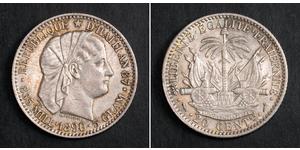
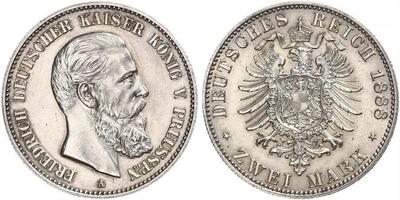
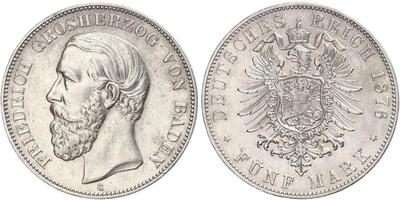
| View |
| preceded by | |
 Haiti (1804 - )
|
| succeeded by |
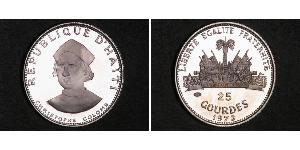
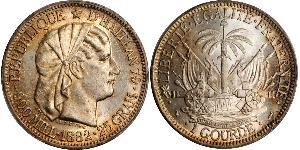
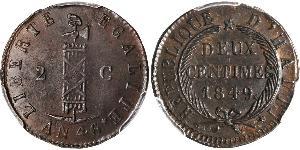
| Haiti (1804 - ) | Link to Wikipedia |
Haiti: History, Coinage and Collectibles
Historical Background
To understand the coin of Haiti is to read its complex history written not just in ink on parchment, but in metal stamped by imperial ambition and revolutionary fervor. For centuries before a sovereign currency existed, this Caribbean nation stood at the intersection of Spanish colonization, French dominion, and indigenous resistance.
The story begins long before independence was declared. In 1492, Christopher Columbus landed on the shores now known as Hispaniola, beginning an era that would see Haiti transform from a Taino hunting ground to one of the wealthiest colonies in the Atlantic world under French rule—Saint-Domingue—and finally into the birthplace of modern republicanism.
The island's economy was driven by sugar plantations and coffee exports. In this trade-centric environment, coinage evolved as an extension of commerce rather than just government fiat. Because Haiti remained isolated for much of its existence following independence—sanctioned out of international markets until the mid-20th century—it had to adopt the currency standards of European powers or rely on foreign bullion circulating within its borders.
The struggle for freedom in 1804 was born from a slave revolt, making Haiti not just another nation but an anomaly that defied Western economic and social structures. This revolutionary spirit deeply influenced the early design philosophy: coins were meant to be declarations of sovereignty in opposition to French authority. When independence arrived under Emperor Jean-Jacques Dessalines (1804–1806), he initially sought legitimacy by issuing coins bearing his likeness, asserting that Haiti's economy was its own master.
However, the political climate remained volatile between 1792 and 1953. There were two empires established before stability returned under a second republic in 1849 (with later interruptions). Each regime shift often saw currency reforms as leaders sought to assert their specific reign over the economy.
Currency and Coinage History
The monetary landscape of Haiti is defined by its scarcity. Unlike its neighbor, Santo Domingo (the Dominican Republic), which minted coins throughout much of history under Spain and France, the French Caribbean colony was a massive trade hub for foreign bullion.
During the colonial era, Spanish Piastres flowed through Haitian ports. These were silver dollars that circulated widely because they matched local needs better than newly established local mints could support them effectively. The coinage from this period is distinct: often featuring French markings or royal portraits on the obverse and religious imagery in reverse.
In 1804, upon independence, Haiti began its own monetary journey but was quickly forced to adopt foreign models due to financial pressure imposed by France following a treaty recognizing their sovereignty. The "Haitian Piastre" eventually emerged as standard currency until the mid-20th century when modern coinage replaced silver and gold standards.
The Duvalier era (late 1950s through 1986) brought stability to minting operations, though this was a turbulent period for politics. The transition from "Gourde" denominations in the early republic years to decimalized currency systems later on reflected global trends toward paper money replacing metal.
Haiti's coinage history is marked by interruptions caused by political coups and sanctions rather than economic failure alone. While other nations developed sophisticated banking sectors, Haiti relied heavily on its unique position as a small but culturally rich state that often used commemorative coins to tell stories of resistance to the outside world.
Mints and Coin Production
The production of Haitian coinage was almost always outsourced. There were never many permanent mints established within Haiti during its early centuries because trade partners demanded currency that adhered to global standards, or the domestic economy could not sustain heavy infrastructure investment.
Mint operations fluctuated based on international relations. During periods of isolation under French pressure in 1804–1936 (post-independence), Haiti issued coins often printed elsewhere and transported for circulation at home.
The most notable production center historically was Paris, France. The designs were often adapted by famous European engravers who crafted the obverse portrait of a Haitian leader while keeping reverse French imagery like fleurs-de-lis or other colonial emblems until independence allowed their replacement with symbols native to Haiti—the palm tree and sugar cane.
In later years (early 20th century), domestic mints were established, though often operating under duress. Modern minting resumed in earnest during the mid-1950s when diplomatic ties improved slightly allowing for more consistent production of silver denominations like the 5 and 10 centimes.
The artistic characteristics that distinguish Haitian numismatics are simple: bold depictions of leaders, lush tropical vegetation (like the hibiscus flower or palm trees) on reverses, and often a focus on cultural symbols rather than purely military imagery. This reflects an aesthetic tradition deeply tied to Creole heritage.
Notable Coins
The Dessalines Piastre (1804–1812):
- Historical Context: Issued immediately after independence to replace French currency.
- Design Features: Portraits of Emperor Jean-Jacques Dessalines wearing an elaborate military cap or coronet. Reverses often showed the palm tree and "Haiti" legend.
- Importance: These are among the rarest early coins, symbolizing Haiti's break from colonial rule.
The Faustin Soulouque 2 Gourdes (1850s–1860s):
- Historical Context: Minted under the brief "Second Empire" led by President Faustin Soulouque, often known as "Faustine."
- Design Features: The coins feature a bust of Soucouquy with inscriptions referencing his reign. Reverses include agricultural scenes and national symbols.
- Importance: A rare glimpse into the short-lived imperial attempts to stabilize Haiti's economy through new currencies during political transitions.
The Duvalier Family Silver Coins (1950s–1986):
- Historical Context: Produced under the regime of Papa Doc and Baby Doc, who sought international trade legitimacy.
- Design Features: Silver coins bearing portraits of François Duvalier or Jean-Claude Duvalier with reverse designs showing national icons like Mount Pelée (active volcano) in some later issues. Copper-nickel denominations also circulated widely for daily commerce during this time.
- Importance: These are the standard entry-level Haitian coins, though high-quality proofs were issued occasionally to showcase craftsmanship outside typical circulation patterns.
The 10 and 25 Centimes of Independence (Early Repubblic Issues):
- Historical Context: Used during the late republic period when coinage began circulating domestically again after decades of stagnation.
- Design Features: Simple but elegant designs highlighting Haiti's natural beauty and cultural symbols like birds or plants common to Caribbean flora. Often struck with higher quality than bulk issues due to collector demand for proof sets issued in 1957–60s.
Note: While many dates appear "rare" or scarce, modern collectors often focus on early colonial Spanish Piastres (often French modified) as high-value items. Modern minted coins from the late 20th century and gold bullion issues issued later reflect ongoing efforts to reconnect Haiti with global investment markets.
Cultural Legacy
Haiti's coinage serves as a tangible record of its unique identity. Unlike other Caribbean nations that relied almost entirely on British or Spanish currencies, Haitian coins (and the Piastres used there) often bore Creole symbols like the palm tree and national heroes.
The design evolution—from colonial emblems to those featuring Toussaint Louverture's image—reflects a nation reclaiming its narrative. Even when facing sanctions that cut off traditional trade routes, Haiti remained open-minded about using coins as diplomatic gifts or educational tools for foreign markets.
For Collectors
Haiti holds an important place in world numismatics not just because of its rare colonial issues but also due to the story it tells. Each coin is a chapter from Haiti's struggle against isolation, slavery, and eventual re-entry into international markets.
The scarcity makes Haitian coins highly valued by enthusiasts seeking pieces that represent independence movements or revolutionary triumphs in 1804–20th century Caribbean history. Collectors appreciate the artistic designs reflecting Creole flora rather than generic European themes.
Today, while modern economies rely on paper money and digital systems, proof sets continue to be produced for collectors seeking commemorative issues highlighting Haiti's resilience as a sovereign state founded by revolutionaries who changed the course of history forever.