| preceded by | |
|
|||||||
 Free Imperial City of Aachen (1306 - 1801)
|
|||||||

| succeeded by |


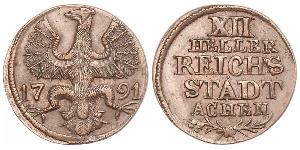
| Free Imperial City of Aachen (1306 - 1801) | Link to Wikipedia |
Free Imperial City of Aachen: History, Coinage and Collectibles
Welcome to a journey through time, where metal and history converge at one of Europe's most significant commercial crossroads. Today we explore the Free Imperial City of Aachen. For centuries, this city-state served as a vital node within the Holy Roman Empire, acting not merely as an administrative center but as a vibrant economic powerhouse located in modern-day Germany.
To understand what lies between your fingers when you hold these historic pieces, one must first appreciate the context that forged them into memory. This is more than a simple catalog entry; it is a narrative of trade, sovereignty, and the transition from medieval independence to Prussian unification. We invite our collectors to look beyond standard specifications and consider what every Aachen piece reveals about its era.
Historical Background
The story begins far back in antiquity, but it was Charlemagne who truly cemented the city's destiny as a European capital of his time. The coronation year 800 AD placed this specific location at the heart of Christendom, earning its nickname "New Rome." However, history is not just defined by glory days; it is also driven by commerce.
Aachen evolved into an Imperial Free City in a period when local autonomy was highly prized. It possessed sovereignty within the Empire but remained distinct from other feudal territories like Bavaria or Saxony because of its unique legal privileges granted directly to it and Bishopric structures that managed relations with Vienna. Its wealth came from trade, particularly soap exports via the Rhine valley and proximity to burgeoning textile markets.
This economic independence created a need for monetary stability but also allowed Aachen to maintain control over local currency circulation long after surrounding regions had adopted standardized imperial weights. The city's location as a neutral meeting ground meant it often hosted peace treaties, making its internal economy highly sensitive to the balance of power between France and Prussia in later centuries.
Currency and Coinage History
Moving forward into our numismatic analysis, we observe how money evolved here. In this region, as across much of Western Europe during the late Middle Ages and Renaissance, coinage was often a reflection of political fragmentation. For a time, Aachen used various measures from its neighbors.
Economic Reforms
Fiscal reforms became crucial for maintaining trade security on the Rhine riverbank. The Free Imperial City eventually adopted more standardized currency systems to facilitate foreign merchants who brought silver bullion into town markets. Over time, this transitioned from local small change toward larger denominations suitable for bulk grain and textile transactions.
The introduction of the Gulden as a major denomination was pivotal for Aachen's economy during its most independent period before annexation by French forces following Napoleonic conflicts in 1794. Following that turbulent decade, when Prussian administration took over later issues featuring Prussia symbols with local variations to honor previous rights.
Mints and Coin Production
Coin production required specific privileges granted by the Emperor or higher imperial diets. While not every major European mint produced gold daily, those that could were vital for trade finance networks connecting Amsterdam and Antwerp through Cologne to Frankfurt via Aachen. During its independent period before 1794/6, the city maintained a level of numismatic autonomy.
The local workshops utilized hand-hammering techniques until late machine methods appeared in later centuries under foreign rule during the transition periods when Prussia took over mint rights post-empire status ended. The artistic style found on these coins reflected regional tastes heavily influenced by Baroque aesthetics seen throughout the Catholic south of Germany, yet simplified for practical use due to volume needs.
Distinguishing marks were key here; specific mints utilized distinctive die cuts or edge patterns that allowed dealers in foreign markets like Antwerp to recognize authenticity instantly. In this way, Aachen became known for high-fidelity striking even when its production volumes were lower than those of major hubs like Nuremberg.
Notable Coins
To identify the most important types found on your auction benches or in family albums:
- Imperial Gulden Varieties (18th Century)
- These pieces carry significant historical weight because they bridge pre-revolutionary independence with Napoleonic annexation.
- Design features typically show a combination of the city arms and portraits representing either local governance or broader imperial figures to maintain trade acceptance across borders without needing foreign re-issuance.
- For collectors, these serve as tangible proof of Aachen's autonomy within wider geopolitical structures prior to 1795.
- Pre-Napoleonic Half-Groschen (Late 18th Century)
- Smaller denominations often used by merchants for daily accounting during trade fairs held in the city walls area before its capture and subsequent reorganization under French administration rules.
- Rarity depends on condition, as circulation demands caused heavy wear compared to larger gold pieces from earlier eras stored securely in vaults until later generations.
- Prussian Transition Issues
- These mark the final chapter of Aachen's unique coinage era following its annexation into Prussia and eventual integration during German unification processes at century end.
- Their value lies less in scarcity than they represent how a small state navigated through massive political shifts without losing cultural identity entirely embedded within regional designs.
Cultural Legacy
Every coin struck here tells a story about the people and rulers who governed its walls. Symbols found on denominations often reference saints important for local pilgrimage or Charlemagne himself as protector of commerce through trade routes spanning borders.
The artistry embedded in these metals reflects not just royal power but civic pride; citizens used coins to broadcast their wealth, religion, and political allegiance when no flags flew high enough above the Rhine banks. As industrial expansion began later decades, coinage design started incorporating motifs representing textiles or steam technology replacing old guilds' imagery from earlier centuries.
This evolution mirrors how societies change around them over time without breaking continuity entirely through new symbols overlaid upon traditional backgrounds to maintain acceptance among buyers who valued stability above novelty when purchasing goods abroad for export markets along river systems connecting northwestern Europe trade networks with central hubs eastward and south across Alps mountain ranges bordering Italian peninsula.
For Collectors
The Free Imperial City of Aachen remains important to collectors today because its currency offers a glimpse into how local autonomy was balanced against imperial authority. You are not merely buying silver or gold; you acquire documents of history that validate economic independence during turbulent 18th-century politics.
- Rarity is tied more closely to political transitions than simple mintage numbers from later periods where production became industrialized under foreign administration rules after Prussian takeover ended earlier self-governance era completely.
- Condition plays a major role in valuation as pieces struck during peak independence before 1794 are increasingly appreciated by connoisseurs who recognize the subtle variations unique to that brief window of imperial status within broader German history.
In Conclusion
We invite you to consider why these objects matter. They stand between two worlds: medieval craftsmanship and modern industrial age before they were absorbed into Prussia's vast administration system in later 19th-century reforms for currency unification across Germany states collectively forming single nation state after decades of separation under French rule previously during late century wars ending centuries earlier.
The legacy survives through every strike mark visible today on auction benches where enthusiasts gather to examine details that define local culture and political resilience captured in silver. Understanding these nuances helps us appreciate not just monetary value but cultural preservation efforts required across generations maintaining traditions established when first mint dies rolled over blank metal plates inside old city fortifications.
As we move forward into future collecting seasons, remember this: Aachen offers pieces rich with narrative potential for those who dig deeper than surface catalogs provide. They tell stories about freedom trade independence within complex empire frameworks that shaped modern geography itself today seen from satellite imagery above Europe's varied landscapes where ancient boundaries lie mostly invisible beneath soil layers now covered green pastures or urban sprawl across northern European continent spanning centuries old borders defined originally by stone walls built around cathedrals rising against skyline backgrounds reflecting glory days passed long ago but remembered fondly whenever someone touches coin resting gently inside palm waiting next time sale day begins soon.
In this way, collecting becomes an act of historical stewardship rather than simple investment pursuit alone. Each piece acquired connects us directly to merchants walking cobblestone streets centuries past under skies that changed nothing over their heads but altered our understanding significantly as modern scholars continue study deeper into archives regarding these ancient artifacts found in private collections around world.