| View |
| preceded by | |
 Ethiopia (1270 - )
|
| succeeded by |
| Ethiopia (1270 - ) | Link to Wikipedia |
Ethiopia: History, Coinage and Collectibles
Historical Background
To understand Ethiopia through its currency is to examine a civilization that has stood as a unique beacon of continuity in East Africa for millennia. This nation occupies the highlands at the northern end of the African continent, forming a strategic hub where history converged with trade routes linking Egypt and India centuries before Europe's Age of Discovery.
The land known historically as Abyssinia served long before it became Ethiopia to be one of the few sovereign states on Earth that never formally submitted to colonial rule. From its ancient roots extending back to the D'mt kingdom, history tells us this region was a center for early human development and later a major player in world affairs during the Axumite era.
While archaeological discoveries often highlight paleo-ontological significance such as early hominid fossils found in nearby regions like Afar, it is the economic life of these ancient peoples that provides context to numismatics. The Aksumite Empire (often referred to as Abyssinia) rose between the first and fourth centuries AD with immense sophistication. Unlike neighbors who were transitioning through local tribal states or foreign domination, Ethiopia developed a complex bureaucracy capable of managing vast territories from Nubia in the north down towards Yemen across the Red Sea.
The kingdom was defined by its ability to absorb influence while maintaining cultural distinctiveness. As Christianity arrived and Islam grew along trade routes over the next millennium, Ethiopian society evolved into an imperial federation based on Solomonic lineage claims that persisted through the Zagwe dynasty until Emperor Amda Seyon I solidified their reputation in the 14th century.
In later centuries, specifically during the late 19th century and early independence era, geopolitical pressures mounted. Following victories against foreign powers such as Italy, which culminated near Adwa towards the end of that century, Ethiopia asserted its sovereignty firmly once again. This historical resilience is mirrored directly in national coinage: Ethiopian currency has often been a tool for declaring autonomy on global maps.
Currency and Coinage History
The evolution of money in this region mirrors the trajectory from ancient empires to modern nation-states, making it one of the most significant chapters in East African monetary history. The Aksumite Empire is renowned for being among the last regions on Earth to mint solid silver coins alongside Roman and Byzantine standards.
In these early centuries AD, Ethiopian merchants utilized copper and iron tools initially before transitioning to precious metals as trade volume grew with Rome. It was Emperor Ezana who established a stable economic environment that facilitated this transition. Aksumite mints produced standard shekels of silver in denominations comparable to Roman denarii or Aurelii standards.
A significant historical pivot occurred when the Derg regime, which ruled following 1974, dissolved many currency units and reorganized state finances after years of civil conflict. Following that period's end in 1991, economic restructuring further modernized the monetary landscape to align with global financial systems while maintaining local tradition.
A critical transition occurred under Emperor Menelik II during his reign starting late 1800s. Before him, Ethiopian coinage often lacked standardization or was heavily influenced by British and Italian designs imposed upon occupied territories. Under Menelik's rule (and later Haile Selassie), the country moved towards full monetary independence.
The modern era of independent currency issues began as Ethiopia reclaimed its borders following World War II efforts to liberate it from occupation in 1940s, leading to a rebranding where coins prominently displayed national symbols rather than foreign imprints. Prior to this, during the Scramble for Africa when most nations were colonized, Ethiopian gold and silver coinage was often accepted internationally alongside British pounds.
Mints and Coin Production
The infrastructure supporting minting in Ethiopia has always been closely linked to political stability. For centuries following Aksum's decline as a unified state during the Zemene Mesafint, local rulers often struck their own brass or copper tokens to demonstrate authority within fragmented territories.
Production centered on major hubs like Addis Ababa and historically Aksum (later known by various colonial designations). The Imperial Mint established in earlier decades utilized advanced techniques to produce gold coins for high denominations while maintaining robust output of copper bronzes for daily circulation. This period saw significant influence from European mints, utilizing imported dies or skilled artisans who were often local but trained on international standards.
The artistic characteristics distinguish Ethiopian coinage as a unique subset in world collections. While most East African coins utilized simple portraits and Arabic script during Islamic periods (like the Sultanates along Somalia's coast), highland Ethiopia used cross icons, biblical quotes written in Ge'ez or Amharic, and later European calligraphy mixed with local symbols.
The technology shifted from hand-stamping of copper sheets to milled edges introduced by Menelik II. This shift is crucial for collectors as it marks the transition from primitive currency (often unmarked) to standardized metal plates used in international trade alongside silver shekels minted earlier centuries which were highly valued globally.
Notable Coins
- Aksumite Silver Shekel:
The oldest surviving coin types from this region are the 3rd to 5th-century silver shekels. These coins typically featured a cross in one corner and an elephant head or winged figure on others, often inscribed with Greek names like "Ezana." They served as direct imitations of Roman gold and currency which circulated widely across Europe before reaching Ethiopia via trade routes. - Menelik II Silver Coinage:
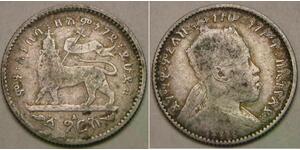
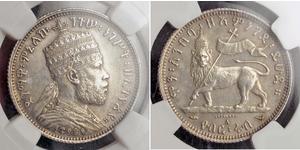
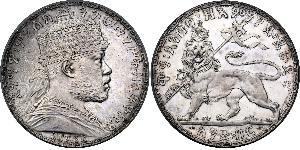
Minted at the end of the 19th century, these coins often bore a profile portrait or bust representing the Emperor. They are notable for displaying his full name and title in Amharic script alongside standard weights corresponding to British silver standards (like shillings), proving Ethiopia's status as a sovereign trading partner even before World War I. - Lion of Judah Gold:
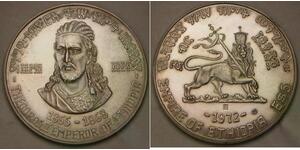
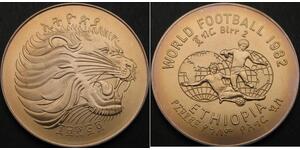
The most prized symbol found on later imperial coins is the Lion of Judah, representing ancient biblical lineage. Early 20th-century gold pieces struck by Emperor Haile Selassie used this crest to assert legitimacy against European powers attempting to claim control over Africa.
Cultural Legacy
Ethiopian coinage is more than a medium for commerce; it serves as an archaeological document of the nation's soul. The transition from ancient crosses and solar discs on bronze bronzes to modern emblems reflects how religious syncretism shaped national identity.
The use of gold shekels by Aksumite kings highlights their wealth rivaling Roman standards, while later currency issues during independence struggles show a determination to maintain cultural distinctiveness despite global political instability. The Solomonic dynasty's claim is frequently represented on modern coins through the Lion and Cross motifs used as primary designs.
Economic challenges such as inflation in recent decades have led to smaller denominations featuring agricultural or industrial imagery, marking Ethiopia's rapid development efforts while still keeping traditional symbols visible alongside new technologies. Even today, though electronic payments are growing rapidly (including digital currency systems), historical coinage remains a vital educational tool for students of African history and collectors.
For Collectors
Ethiopian coins hold exceptional importance to numismatists because they bridge the gap between ancient empires and modern nationhood. The scarcity of early Aksumite silver makes these finds among the most exciting treasures for advanced collectors, providing tangible evidence that Africa hosted a sophisticated currency economy centuries ago.
The narrative extends beyond mere rarity; each coin from Menelik II's era tells a story of political independence against imperialist encroachment. Collectors will find that Ethiopian coins offer diverse designs ranging from ancient gold solidi to industrial-era copper bronzes used in local markets during the Derg years and post-independence.
The historical significance remains undimmed because these items provide visual proof of Ethiopia's sovereignty on an international stage, a rarity among African numismatic archives. As collectors seek pieces that highlight cultural heritage over mere investment value, Ethiopian coins from all eras—including those struck after the nation joined BRICS in 2024—offer rich opportunities to study artistry and history combined.