| View |
| preceded by | |
|
|||||||
 Electorate of Saxony (1356 - 1806)
|
|||||||

| succeeded by | ||||
|


| Electorate of Saxony (1356 - 1806) | Link to Wikipedia |
Saxony: History, Coinage and Collectibles
Historical Background
To understand the allure of Saxon numismatics, one must first traverse its storied political origins. Emerging from the vast fragmentation of the medieval Empire in 1180 after Frederick Barbarossa dismembered the old Duchy of Saxony, this territory began as a modest eastern possession under the House of Ascania. While geographically limited compared to neighbors like Bavaria or Austria, its strategic location along the mighty Elbe River made it an economic superpower in waiting. This river served as Germany's first great north-south artery, connecting inland markets with maritime trade hubs.
The narrative reaches a pivotal turning point in 1423 when Duke Frederick I of Meissen—a member of the House of Wettin—received the electoral dignity and lands of Saxe-Wittenberg from King Sigismund. This acquisition fundamentally altered Saxony's trajectory, transforming it into one of the Seven Electorates that crowned German Kings. The consolidation under the Wettins allowed for unprecedented political unity; Frederick III famously united various fragmented territories to create a cohesive state structure. Later in history, this central position made the region a battleground during religious upheavals and imperial reforms.
This historical dominance was cemented when Dresden rose as the capital at the end of the 15th century. Under Elector Maurice (r. 1520–1547) and his successors, Saxony became the heartland of Martin Luther's Reformation. This religious shift left an indelible mark on coin design across Europe—shifting from traditional saints' depictions to allegorical figures representing faith and virtue rather than Catholic patrons.
Currency and Coinage History
The monetary evolution in Saxony mirrors the region's rise as a commercial powerhouse. In its early medieval phase, like much of Central Europe, Saxon rulers issued modest copper or silver pieces for local circulation—often small Schillings used within towns rather than trade coins intended for export. However, Saxony’s unique geographical position meant that it needed reliable currency to facilitate transit and commerce with the Hanseatic League.
The transition from fragmented town-based money to a unified state currency began in earnest during the Renaissance. The Electors required stable gold and silver coinage not just for their courts but to underwrite trade tariffs, army salaries, and administrative budgets that were rising sharply due to inflationary pressures known as "Gresham’s Law." By the 16th century, Saxony had mastered the art of the Reichsthaler. The production of high-purity silver coins allowed Saxon merchants to dominate markets across Poland and Russia before those same trade routes expanded into Western Europe.
During times of crisis—such as when Frederick William I (r. 1694–1735) faced financial difficulties or during the Napoleonic wars—Saxony occasionally resorted to debasement, issuing copper coins with reduced silver content to pay for armies. Collectors must appreciate that these "bad times" issues often carry significant historical weight; they represent a state's desperate attempts to maintain solvency against overwhelming geopolitical odds.
Mints and Coin Production
Saxony possessed an advanced tradition of minting that was centuries ahead of other German territories. While early coinage came from various provincial towns, the capital at Wittenberg eventually housed a prestigious Imperial Mint (Reichsmünze), granted by Emperor Frederick III in 1470—though this specific title often refers to broader imperial control before being localized more fully under Elector John Constantine.
The true artistic and industrial heart of Saxon numismatics moved to Dresden. As the new capital, it became a center for high-quality engraving technology that rivaled Italy during its golden age. The mint in Leipzig remained vital as well because of its location on trade routes; this dual-mint system ensured that silver flowed constantly through Saxony's economy.
The production techniques were refined by foreign masters employed under the Electors, particularly those from Strasbourg and Venice who brought Italian artistic influence to German designs. This influx allowed for exquisite portraiture standards not seen in other regions until later centuries of modern history. The use of "mint marks"—letters indicating which workshop produced a piece—became highly standardized as trade routes grew wider.
Notable Coins
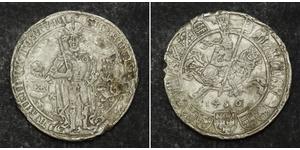
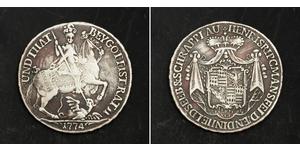
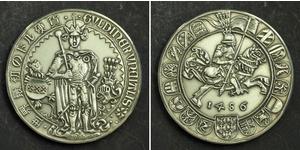
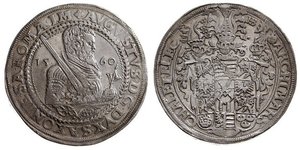
- The Electoral Thaler (16th Century): These coins mark the beginning of Saxony's golden age. They feature busts of Electors like Maurice or Augustus displaying fine, humanist features rather than idealized medieval caricatures. Collectors prize these for their depiction of "humanism in metal," where the ruler looked distinct and dignified against a backdrop of oak leaves symbolizing imperial authority.
- The Saxon Gold Ducat (16th-17th Century): A rare but highly coveted coin, this gold piece usually depicts an elector standing within an oval medallion. They were often used for high-value diplomatic transactions rather than daily trade due to the rarity of bullion available in a silver-dominated economy.
- The "Bull Head" Coins (1573): Issued during turbulent times, these depict a wild beast representing political chaos or perhaps even the Elector himself. These are famous among historians because they show how coin designs were used to communicate complex theological and political messages directly to citizens.
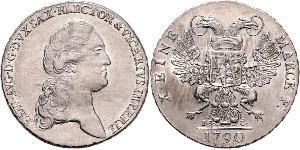
- Friedrich August II's Silver Grosh (18th Century): As Saxony transitioned into a Kingdom in 1806, these coins reflect the shift away from Holy Roman Imperial iconography. They are notable for their clean lines and reduced religious symbolism as secularism grew stronger under later rulers.
Cultural Legacy
Saxony's coinage is a tangible reflection of its unique identity within Germany before unification occurred in the 19th century. Unlike many neighbors that clung to Catholic imagery, Saxon coins frequently featured portraits accompanied by allegorical figures representing Peace and Justice alongside biblical texts from the Reformation era.
The artistry achieved during Elector John George II's reign is particularly celebrated today; his coin designs are considered masterpieces of German numismatic art. Furthermore, as a staunch ally to Frederick the Great of Prussia in later centuries (though historically Saxony often found itself between rival powers), its currency circulated widely across Europe. This meant that Saxon silver could be seen from Lisbon to St Petersburg.
The enduring legacy lies in how these coins document the struggle for state-building amidst fragmentation and war. They tell a story of resilience: small territories using their strategic position on the Elbe river to forge unity, wealth, and distinct cultural influence over four hundred years of history before becoming part of the unified nation.
For Collectors
Saxony offers an invaluable opportunity for historians of art or politics looking through a lens of metal. While many collectors seek rare gold pieces from Austria-Hungary, Saxonian silver is often more historically nuanced due to its role in the Reformation and Holy Roman Empire transitions. Scarcity issues regarding later periods (such as when melting down occurred during French occupation) make surviving examples highly prized.
The importance of collecting Saxon history today lies not just in value fluctuations, but in owning a piece of one of Germany's oldest continuous dynasties. Whether hunting for the early silver thalers or finding unique copper Schillings issued after 1680 which reflect economic hardship due to war wear and inflation issues—the collection offers a narrative journey through Europe’s greatest geopolitical era.
Saxony stands as proof that even small states with limited geography could command immense attention in the world of power, wealth, and culture—a fact stamped eternally into metal by generations of Electors who sought not just to rule Saxony but to lead Germany.