| View |
| preceded by | |
| Dyrrachium(Illyria) |
| succeeded by |
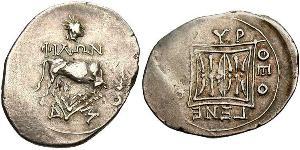
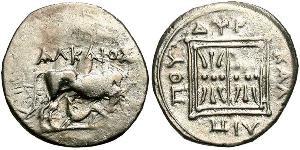
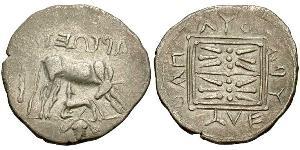
| Dyrrachium(Illyria) | Link to Wikipedia |
Epidamnus / Dyrrhachium: History, Coinage and Collectibles
Historical Background
The ancient landscape of the Adriatic coast was once dominated by a city known first as Epidamnos, later immortalized in Roman records as Dyrrhachium. Established around 627 BC through a partnership between settlers from Corinth and Corcyra (modern-day Corfu), this strategic port became more than just a settlement; it evolved into the beating heart of interaction between the wider Greek world and the indigenous Taulantii people. For coin collectors, this location represents one of the most fascinating intersections in antiquity: where Hellenistic tradition met Illyrian power dynamics.
In its earliest days, Epidamnos was an oligarchy that balanced commercial ambitions with territorial entanglements with neighboring Illyrians. The city's governance shifted over centuries from aristocratic rule to democratic systems, a transformation noted by Aristotle himself as he analyzed the evolution of mixed constitutions in this specific polis. Its political stability often hung on delicate trade relationships; disputes regarding local commerce eventually sparked wider conflicts involving Corcyra and Corinth that rippled outward toward Athens and Sparta.
The city's trajectory shifted dramatically when Rome entered the Mediterranean sphere. Seized by Roman forces around 229 BC during their first war against Illyrian aggression, Epidamnos was spared full annexation initially but became a loyal colony. The Romans found the original name unsuitable for bureaucratic purposes in Latin; consequently, it was renamed Dyrrachium (sometimes spelled Durrhachion). This new moniker helped avoid negative linguistic associations with 'damnum,' meaning loss or damage. By rebranding this coastal fortress into an administrative center on Rome's eastern frontier and connecting the Adriatic port to Macedonia via the Via Egnatia, they cemented its status as a transit hub for emperors and travelers alike.
Currency and Coinage History
The history of coinage in this region mirrors the shifting tides of Mediterranean power. The currency evolution began with silver drachmae derived from Corinthian standards, reflecting the city's Greek colonial origins. As trade routes opened between Italy (specifically Brundisium) and Macedonia through Epidamnos, demand for reliable bullion surged. This period saw the emergence of high-quality electrum coins minted at this port before it fell fully under imperial control.
The transition to Roman hegemony marked a seismic shift in numismatic output while maintaining continuity with earlier traditions. Dyrrhachium did not merely receive generic Imperial issues; its strategic location along the Via Egnatia made it a primary issue point for silver coinage that facilitated commerce across northern Greece and Illyria. Even as central imperial mints produced vast quantities of denarii, local needs were met by coins bearing specific regional legends or artistic variations unique to Dyrrhachium's administration.
The civil wars between Julius Caesar and Pompey in 48 BC added a layer of urgency to the region's economy. These conflicts disrupted trade but also accelerated administrative standardization across Roman territory. Following these tumultuous years, the city maintained its role as a monetary bridge until becoming a formal part of Epirus Nova province in the late third century AD. This period solidified coin production patterns that would persist into later centuries.
Mints and Coin Production
The minting traditions at this Adriatic stronghold reflect the city's function as a nexus between East and West. During its Greek phase, coins were likely produced in local workshops staffed by artisans from Corinth or Corcyra before becoming more integrated into broader Hellenistic systems under Pyrrhus' campaigns.
Under Roman supervision, production centers shifted to support military logistics and provincial trade needs. The mint at Dyrrhachium was responsible for issuing silver coinage specifically intended for the Illyrian hinterland, distinguishing itself from mints in Italy or Greece by incorporating local iconography into standard Imperial designs.
Techonologically, these workshops utilized advanced die-cutting methods common across the Empire but applied them with distinct regional flair. As fortifications were strengthened under Emperor Justinian I to defend against barbarians and maritime threats, so too did administrative oversight become stricter over coin production, ensuring that counterfeiting remained a rare issue on local issues.
Notable Coins
The Corinth Drachmae:
Hailing from the colony's earliest years, these silver pieces represent the direct Greek influence. They feature portraits of Apollo or Heracles alongside city symbols like towers representing its fortifications. These early issues are prized for their artistic purity and connection to colonial heritage.
The Roman Imperial Denarii:
Coinage bearing the likeness of Julius Caesar is highly significant, reflecting his political rise in the 40s BC. Coins depicting Pompey or Augustus carry inscriptions related to Dyrrhachium's strategic importance during these eras. Collectors appreciate how these portraits bridge Roman history with local geography.
The Antonine Gold Aurei:
In the 2nd century AD, gold coinage flowed through this city as it served key provincial routes for luxury goods and tax collection. These heavy coins bear distinct imperial titles referencing Illyrian provinces or emperors who visited via sea.
Cultural Legacy
The legacy of Epidamnos/Dyrrachium in numismatics extends beyond its metal content; it serves as a physical record of the transition from ancient Greek independence to Roman unity. Each die cut preserved on these coins captures centuries of cultural fusion—where Illyrian symbols occasionally appear alongside Greek deities and later Imperial eagles.
The city served as a key stronghold against Slavic incursions in Byzantine times, reinforcing its religious importance after the bishopric was elevated to metropolitan status. Coins from this era often feature Christian imagery mixed with traditional motifs of ancient power, illustrating how faith superseded pagan mythology without completely erasing previous artistic traditions.
For collectors
Epidamnus/Dyrrachium remains a jewel for coin enthusiasts due to its unique position at the crossroads of Greek and Roman heritage. While modern Albania claims this land historically, ancient numismatists focus on these coins as artifacts of imperial administration in Illyria.
- Rarity Factors: Early colonial silver issues are rarer than later Imperial denarii due to limited production runs during the oligarchic or early republican phase.
- Historical Context Value: These coins document a critical trade corridor between Rome's western provinces and Greece, offering insight into ancient commerce that textual records often overlook.
In summary, collecting coinage from this region offers tangible access to the complex tapestry of Mediterranean history. From Corinthian founders to Roman administrators and Byzantine rulers who fortified its walls, Epidamnus/Dyrrachium encapsulates centuries of trade, war, culture and state evolution.