| View |
| preceded by | |
 Duchy of Saxe-Meiningen (1680 - 1918)
|
| succeeded by |
| Duchy of Saxe-Meiningen (1680 - 1918) | Link to Wikipedia |
Duchy of Saxe-Meiningen: History, Coinage and Collectibles
Welcome to an exploration of one of the most fascinating micro-states in southern Germany before modern borders were redrawn. The story begins in the mist-covered forests of Thuringia, a region defined by rolling hills and deep rivers where commerce flowed as freely as water through local springs. This duchy was born from division rather than conquest. When Duke Ernest I died without a surviving heir to carry his name forward alone in 1675, he chose fragmentation over concentration, leaving seven sons to rule separate territories.
This geopolitical splintering created Saxe-Meiningen through formal partitions between the years 1680 and 1691. It was a time of cautious governance where stability relied on maintaining good relations with powerful neighbors like Prussia and Austria, rather than expanding borders through military aggression. As history unfolded into the nineteenth century, this region became more deeply integrated into the rising German nation-state while retaining its unique Ernesite character within the Wettin family dynasty that would eventually unite much of central Europe.
Currency and Coinage History
The evolution of money in Saxe-Meiningen reflects broader shifts across Germany. In earlier decades, coin circulation depended heavily on foreign silver imports because local mines were insufficient to support a large domestic minting operation for precious metals at scale.
- During the late eighteenth century, copper pieces such as half-groschen and groshens circulated within towns and countryside markets.
- Around 1740-1825, a transition to silver thalers marked economic maturity. These were often modeled after neighboring Thuringian issues but maintained strict local weight standards that ensured consistency in trade routes connecting Bavaria with Saxony.
The true transformation arrived during the unification movements of 1870-1892. After Otto von Bismarck orchestrated German victory against Austria, he reorganized political structures across Central Europe. Saxe-Meiningen was compelled to join the North German Confederation in a manner similar to other smaller sovereign entities.
This meant that while local coinage designs preserved regional identity, metal standards shifted toward gold marks and silver reichsthalers governed by federal law. Collectors can observe this transition clearly when examining dates spanning from 1860 through the empire's collapse in nineteen-eigh-eighteen-one-ten-twenty.
Mints and Coin Production
The principal center of numismatic activity resided within the capital itself, utilizing skilled artisans known as masters coiners who traveled between various German courts to bring technical expertise across borders. Artistic trends favored allegorical depictions paired with heraldic symbols representing ruling houses rather than elaborate battle scenes common in earlier dynasties.
Minting traditions were pragmatic; local workshops operated alongside national mints for short periods before consolidating fully under imperial supervision toward the end of the dynasty's existence. The artistry found on these coins often featured classical Greek or Roman motifs blended with Germanic heraldry, creating a visual language unique to Ernestine states.
Districts such as Hildburghausen and Sonneberg contributed economic strength that supported currency needs for rural trade markets surrounding the central court at Schloss Elisabethenburg. Even though industrial revolutionization was less prominent here than in Berlin or Hamburg, precision craftsmanship remained high because coins were used directly to pay state salaries and purchase supplies.
Notable Coins
Certain issues stand out as historically significant pieces for those assembling a collection representing this era. One notable type is the gold sovereigns struck during periods of prosperity under Georg II in nineteenth-century decades before World War I began reshaping Europe permanently.
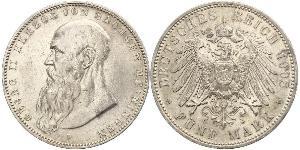
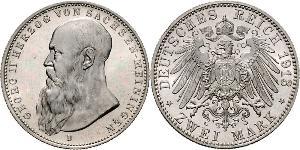
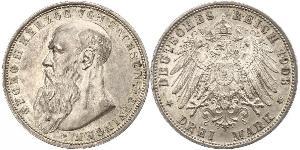
- The 1895 mark coinage, specifically silver crowns or large denomination notes backed by currency standards set for the German Empire era. These often bear high-relief portraits and are valued not only because of their condition but also due to the limited time window before national unification forced changes in iconography.
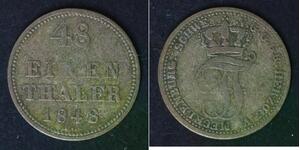
Silver half-thalers minted early in 19th century display clear features connecting them back to Prussian designs while retaining distinct local shields or arms. These were popular for everyday transactions among artisans, merchants selling goods at weekly markets across the district of Saalfeld and surrounding agricultural zones.
Cultural Legacy
The metal tokens left by this duchy serve as silent witnesses to its cultural richness during the nineteenth century. Court orchestras under ducal patronage funded music concerts that attracted visitors from Prague or Vienna who brought their own musical styles into coin designs, perhaps subtly reflected in ornamental leaf patterns decorating edges of pieces.
Social harmony prevailed within this small territory where religious tolerance and administrative efficiency allowed for steady growth despite geopolitical pressures. The duchy's identity as a member state rather than an imperial power means many coins feature simpler iconography compared to Bavaria or Württemberg counterparts, focusing instead on heraldic arms that emphasized noble lineage without the military pomp seen elsewhere.
The decline of this monetary independence following 1918 is poignant. As feudal systems collapsed under revolutionary movements in Germany and Austria-Hungary dissolved, coinage became standardized across entire continents rather than individual provinces where dukes once ruled with absolute authority over local finances.
For collectors
Todays investors should appreciate that acquiring these historical items means owning artifacts from a world of princely courts and royal ceremonies. They represent the twilight era before democratic reforms transformed how money was managed across Central Europe. Every scratch on an old silver mark tells stories about trade routes connecting towns like Hildburghausen or Saalfeld with markets beyond.
Preserving these items ensures that history remains accessible without needing extensive textual records for every individual coin condition described in auction catalogs. They offer a tactile connection to the craftsmanship and artistic ambition of skilled artisans who worked under duress during changing political landscapes throughout late century Europe.