| View |
| preceded by | |
 Duchy of Nassau (1806 - 1866)
|
| succeeded by |
| Duchy of Nassau (1806 - 1866) | Link to Wikipedia |
Duchy of Nassau: History, Coinage and Collectibles
Historical Background
The story of the Duchy of Nassau is inextricably linked to the turbulent reordering of Europe following the Napoleonic Wars. This small sovereign state existed on a fragile platform between 1806 and 1866, occupying lands that today form parts of Rhineland-Palatinate and Hesse within modern Germany. Before its unification as an independent duchy in August 1806 under pressure from Napoleon I, the region was fragmented into ecclesiastical territories ruled by Bishoprics of Mainz and Trier. The arrival of French influence brought about a secularization process that dissolved these religious domains. This transition shifted economic power directly to the state house, fundamentally altering how wealth was managed and taxed.
The strategic location of Nassau along vital trade arteries provided it with natural importance beyond its size. Rivers such as the Main and Rhine served as commercial corridors connecting Western Europe with Central markets. Following unification in 1806, the administration faced a pressing economic reality: stabilizing currency to facilitate this river-borne commerce while navigating complex treaties within the Confederation of the Rhine and later the German Confederation.
The political landscape was dominated by two main branches before their merger under Frederick William. By 1815 at the Congress of Vienna, territorial expansions occurred as neighboring principalities adjusted borders or surrendered lands to Prussia during the rise of Dutch rule in nearby territories. These geopolitical shifts meant that a coin minted here reflected not just local pride but international diplomatic maneuvering.
Culturally, the duchy was known for its liberal reforms compared to surrounding ecclesiastical states. The abolition of serfdom and introduction of freedom of movement between 1806 and 1819 created a mobile populace essential for internal markets. This societal openness is mirrored in their monetary policy; they sought stable, modern currency systems rather than archaic feudal dues that characterized other regions.
Currency and Coinage History
The numismatic evolution of the Duchy followed a trajectory common among German states seeking fiscal independence after Napoleon's withdrawal. Initially, commerce was conducted using French assignats or generic Thaler coins circulating across Europe due to their size gaps in local economies.
Maintaining sovereign control required minting official currency that could pass alongside Prussian and Bavarian money without friction. Early issues often bore the insignia of House Nassau but were struck with standards designed to align with broader Rhineland trade requirements, facilitating movement from Wiesbaden downriver to Frankfurt or up towards Koblenz.
The mid-century period witnessed a refinement in production quality as demand grew for smaller denominations suited for daily artisanal exchange. This era of stability allowed the minting workshops to focus on artistic merit rather than mere utility. By 1850, local silver coins were highly sought after by traveling merchants who preferred the distinct Nassau strike over generic imperial coinage.
Mints and Coin Production
In terms of production centers, the Duchy relied on a combination of specialized workshops within its borders and agreements with neighboring major mints. While it did not possess massive industrial smelting capabilities during this period, quality was maintained through rigorous metal sourcing from mining regions in the Taunus mountains.
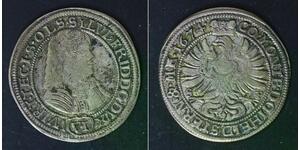
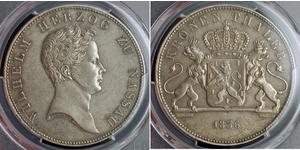
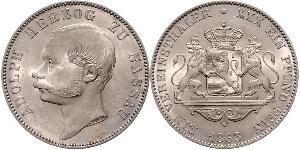
The artistic characteristics of Nassau coinage are distinct for their integration of local heraldry without excessive ornate detail common in French influenced designs. The portraits on silver coins often featured dignified representations of rulers like William I, reflecting a Neoclassical aesthetic that was fashionable throughout the 19th century. Die-cutting techniques were advanced for small principalities at this time.
The production environment fostered an era where coinage served as art objects rather than mere metal commodities. Mint marks indicated specific locations or periods of manufacture within the tiny administrative borders, offering collectors a glimpse into logistical organization that was complex for such a modest territory.
Notable Coins
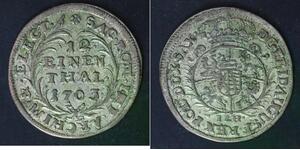
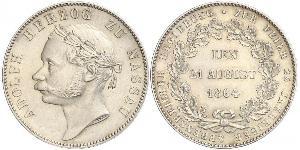
The most historically significant pieces come from the silver series struck towards the end of independence prior to annexation by Prussia in 1866. The Half Guilder and Thaler denominations feature the House of Nassau coat of arms prominently on their reverse sides, often accompanied by motifs referencing local landscapes or castles like Nassau Castle itself.
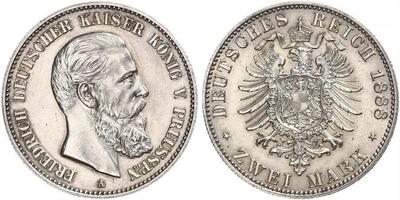
The portrait coins carry particular importance because they depict rulers during a time when political unification was looming but not yet complete. The 1806 issues mark the beginning of this sovereign era following the merger decree in August 1806, while late period pieces from the 1850s represent high artistic quality before state dissolution.
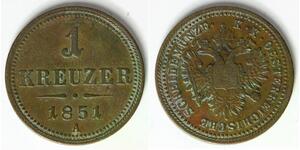
Copper coinage also played a critical role for local farmers and merchants who required denominations suitable for daily wages. The penny series is often found with variations that reflect changing designs over thirty years of issuance, providing a timeline of stylistic shifts in relief depth and die wear patterns appreciated by experts studying statecraft through metal.
Cultural Legacy
The coinage reflects the transition from feudalism to modern bureaucracy. The symbols used on coins—specifically those associated with House Nassau—connect this duchy directly to its extended lineage in Luxembourg and the Netherlands, styling themselves as part of a larger family tree known today through Orange-Nassau.
Coin collectors appreciate these items because they capture the essence of a micro-state that managed significant reforms like secularization while maintaining economic independence against major powers. The design philosophy was practical yet regal; even when political turmoil threatened annexation, coinage maintained stability as currency continued to circulate into Prussian provinces.
This heritage links back to historical identity preserved within museum collections. Wiesbaden served as the capital where administrative and mint functions converged in a way that emphasized state prestige despite territorial constraints compared to neighbors like Bavaria or Saxony.
For collectors
- Rarity due to short lifespan between 1806-1866 makes pieces from specific periods particularly valuable.
- Coinage connects the region globally through House Nassau heritage in Luxembourg and Dutch monarchy.
- Historical significance offers access to understanding how small principalities adapted currency systems under foreign pressure.
The legacy of this coinage remains a testament to German numismatic variety before unification, providing unique study material for enthusiasts interested in the economic mechanics preceding 1871 Empire formation.