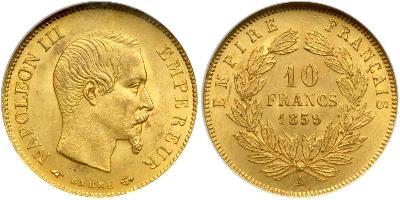
| View |
| preceded by | |
 Dalmatia
|
| succeeded by |
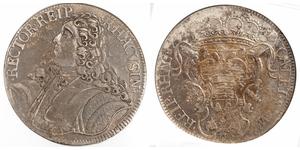
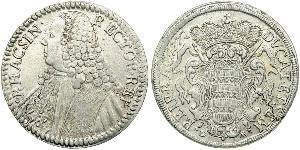
| Dalmatia | Link to Wikipedia |
Dalmatia: History, Coinage and Collectibles
Historical Background
The region historically known as Dalmatia stands at a fascinating crossroads where the ancient Illyrian tribes of Europe once roamed before encountering the legions of Rome. This rugged coastal strip along the Adriatic Sea has long been defined by its position between powerful empires and republics, serving primarily as an economic gateway connecting the Balkans to the Mediterranean world. Its history is not merely a succession of battles but a tapestry of cultural fusion that began with Roman colonization following Illyrian tribal settlements.
The geography dictated the economics for millennia; it was never just a land mass but a maritime domain where commerce and navigation were vital survival strategies. Throughout antiquity, this territory served as the eastern flank of a larger political entity known simply as Dalmatia within Rome's administration. As history progressed through the Middle Ages, following centuries when Byzantine influence faded in favor of Slavic migration and settlement, local city-states began to emerge with their own administrative autonomy.
The medieval landscape was dominated by maritime powers. The region shifted between various hegemonies: it became a prize for the Republics of Venice and Ragusa (Dubrovnik) due to its strategic harbor locations on the Adriatic coast. By the time of the Napoleonic era, Dalmatia fell under French administration as part of the Illyrian Provinces before being absorbed into the Austro-Hungarian Empire following Napoleon's defeat.
These shifting allegiances meant that while the local population retained a strong sense of regional identity rooted in ancient Roman roots and Slavic tradition, their economic systems were heavily dictated by the dominant powers. This environment fostered a unique cultural blend where Latin inscriptions coexisted with emerging Romance dialects among Italian coastal communities. The region did not function as an isolated state but rather served as vital territory for broader entities like Venice, Austria-Hungary, and later Croatia.
The fall of the Roman Empire in the West brought fragmentation that lasted centuries until a stable identity began to coalesce again during the modern era when it was integrated into larger political unions such as Triune Kingdom of Slavonia. Despite these administrative unifications with other regions or kingdoms, Dalmatia remained an economic powerhouse whose wealth derived from shipbuilding and salt production.
Currency and Coinage History
The monetary history of this region is a direct reflection of its status as a crossroads for trade. For centuries before the era of standard banking systems, coinage acted not just as currency but as an instrument of power. The ancient Roman province established a framework where gold denarii and bronze coins circulated alongside local barter goods.
In medieval times, however, it was Venice that dominated the economic sphere. As Venetian ships plied these waters carrying silk and spices from the East to Europe, they brought with them their own standardized currency: the florin or ducat. These gold coins were prized for their purity and became the *de facto* standard of wealth across Dalmatia.
The shift in control during later centuries brought new monetary challenges under the Ottoman Empire, which introduced its copper as well as silver standards that circulated heavily until they eventually displaced earlier Venetian issues. Following the Napoleonic era, when the French established Illyrian Provinces, a brief period of innovation occurred where new silver and gold coinages were produced for internal commerce.
This was succeeded by long periods under Austrian rule where standardized Habsburg currency replaced local denominations, yet older coins remained in high demand. The evolution from ancient solidi to Renaissance ducats provided continuity in trade but often required adaptation of the minting systems when one ruler gave way to another.
Mints and Coin Production
The production centers for these currencies were crucial hubs where artistry met economics, most notably located in Zadar. The local mint established by Venice produced silver pieces bearing inscriptions that reflected both the trade routes it serviced and its cultural identity.
Innovative designs emerged during this period as mints adjusted to the technical demands of striking coinage under pressure from international standards. While some production was centralized, smaller towns also issued tokenages for local merchants who operated outside larger banking systems but required reliable medium-of-exchange for market transactions in port cities like Split and Kotor.
The artistic styles evolved rapidly over the centuries reflecting broader European movements: Gothic motifs gave way to Renaissance humanism, then Baroque exuberance before stabilizing into neoclassical designs favored by Napoleon. This transition is evident on many rare specimens that still survive today in museums across Europe and North America.
The production process utilized technologies inherited from the ancient world but adapted for speed under imperial supervision. The mints often relied on water power or local craftsmen skilled in metallurgy, ensuring consistent quality despite economic fluctuations which sometimes led to debasement of metal content during wartime scarcity.
Notable Coins
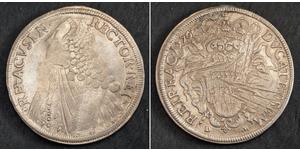
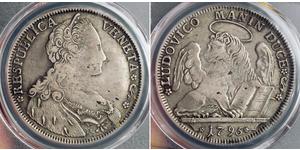
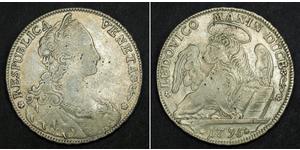
The coinage produced within this region includes several types that are highly sought after. The most renowned pieces come from the era when Venice ruled these territories, featuring portraits of Doges or religious imagery alongside symbolic shields representing maritime dominance on both sides of Europe.
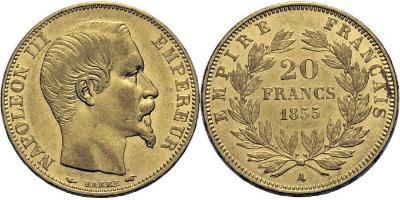
Among the rarest and historically significant are specimens struck during the short-lived period of French rule in 1806-1813 known as Illyrian Provinces. These bear legends written entirely in Italian reflecting a desire to unify these diverse populations under an enlightened government before they reverted back into Austrian hands.
Further collectors should pay attention to those struck for the Republic of Ragusa, which operated its own unique coinage with designs that differed significantly from Venetian issues due to local autonomy. These are especially distinct in their iconography representing a small maritime republic's aspirations amidst larger powers.
Late 19th century examples feature portraits and monograms associated with the Austrian monarchy showing how this region was integrated into broader imperial structures yet retained specific local identities through coinage design conventions established by Vienna mints.
Cultural Legacy
The coins themselves serve as a historical narrative of cultural fusion present in Dalmatia. They represent a blending where Slavic and Italo-Roman elements intermingled, visible both on the language used to inscribe denominations and artistic styles chosen for depicting local patrons or patron deities.
Symbols like the Venetian Lion are seen alongside references to Roman mythology that tied modern identity into ancient heritage. These artifacts show how rulers sought legitimacy through connections back to antiquity while simultaneously promoting current political agendas of stability under monarchy or republics alike.
For collectors
Historical pieces associated with this region offer a unique window into the Mediterranean world's monetary development during pivotal centuries. They remain important for their scarcity, which often arises from interrupted production lines caused by war and shifting borders following Napoleonic defeat in 1815.
Currency evolution
The transition of coinage usage reflects a broader shift toward international standards like the silver thaler replacing gold ducats for everyday commerce, illustrating how trade needs superseded strict localism even within small regional borders.
In Conclusion
This region continues to fascinate those who study numismatics and history alike. Each preserved specimen tells a story of an era when smaller communities navigated the political waves between major empires using only metal in their hands as currency for survival, trade or tribute.