| View |
| preceded by | |
 Cote dIvoire (1958 - )
|
| succeeded by |
| Cote dIvoire (1958 - ) | Link to Wikipedia |
Ivory Coast: History, Coinage and Collectibles
Welcome to our curated exhibition on a nation whose very name evokes the richness of its mineral wealth. Today we explore the history and coinage of Ivory Coast, formerly known as Côte d'Ivoire (or Costa do Marfim in Portuguese). For those who appreciate monetary artifacts that tell stories beyond simple value tags, this region offers a fascinating study of colonial trade routes shifting to independence-era state identity.
Historical Background
The history of Ivory Coast is deeply rooted in the trans-Saharan and coastal economies. Long before European influence took hold along the Gulf of Guinea, the area was defined by its role as a conduit for wealth flowing from the interior to maritime ports. The Portuguese first mapped this region during their era of exploration, dividing Africa into distinct coasts based on local commodities like gold or ivory.
In these early centuries, trade often bypassed centralized coinage in favor of barter systems using salt, textiles, and even brass weights. However, by the 15th century, European merchants began utilizing foreign currency to pay for goods ranging from timber to precious metals. The region's neighbors, such as those on the neighboring Gold Coast (now Ghana) and Guinea coast, established trade networks that utilized silver coins imported from Spain or Asia.
The shift in power dynamics came with French intervention during the Scramble for Africa. By 1842-1850, France had secured protectorates over territories that would eventually form the Republic of Ivory Coast. This era saw a transition to formalized colonial administration and economic integration into the larger West African Federation (AOF). The cultural landscape remained diverse, blending indigenous traditions with Islamic scholarship from North Africa in the north and French influence on the coasts.
This period was not merely one of occupation but also consolidation. It built upon earlier states like Gyaaman or the Kong Empire to create a stable administrative entity by 1893. The economy relied heavily on agriculture, particularly cash crops destined for export markets in Europe and North America.
Currency and Coinage History
The monetary system of the region is intrinsically linked to its colonial past. Upon full integration into French West Africa (AOF), Ivory Coast adopted the common currency used across the federation: the Franc Africain, later reformed as the CFA franc. This created a fascinating continuity in numismatics that often confuses casual buyers.
The coinage evolution tells two main stories: political independence and economic reliance on stability. Upon gaining sovereignty from France around 1960, Ivory Coast did not immediately mint its own currency for international trade but retained the CFA franc system initially to facilitate commerce with neighboring states like Ghana and Guinea. This retention of a common standard meant that coin production was standardized by French mints rather than local centers.
This situation shifted slowly as independence celebrations demanded national representation on metal tokens used in domestic transactions, such as market fees, taxes, or salary payments for civil servants. The narrative here is one of economic maturation: first serving a unified colonial bloc and later asserting national identity while maintaining the currency's value integrity through French monetary oversight.
In this context, collecting coins from Ivory Coast becomes an act of tracking that slow transition—moving from generic West African designs to those bearing local fauna like elephants or agricultural themes related to cocoa production. This shift occurred primarily after 1962 with the minting of smaller denominations intended for everyday circulation.
Mints and Coin Production
Unlike many Asian nations, Ivory Coast did not develop a robust network of domestic industrial mints in its early decades. Much coinage was struck abroad to meet volume needs required by an economy exporting high volumes of agricultural products like cocoa beans or coffee.
The production centers were centralized first in France itself (the Pessac mint for example) and later potentially in Dakar, Senegal. This centralization ensured that the design aesthetics aligned with French numismatic standards—clean lines, classic iconography—and often bore markings indicating their West African origin.
Collectors should understand that these coins were produced to support a bustling economy of smallholder cash-crop production. The sheer volume required for local commerce meant many pieces were struck in high denominations or standard alloys (brass, aluminum-nickel) rather than precious metals, which preserved them as affordable educational tools.
Notable Coins
The following series are considered essential study materials for collectors of West African numismatics. We highlight the historical context and visual distinctiveness of each group without relying on current market appraisals or technical grading jargon that might alienate enthusiasts who value history.
- Transition Coins (Early 1960s): The earliest issues following independence are valuable for studying design evolution. These pieces often feature the national coat of arms and motifs representing cocoa harvest, signaling to citizens that their exports were fueling global wealth while reinforcing local patriotism.
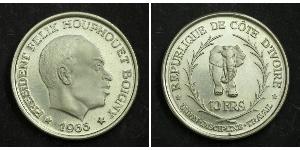
- The Elephant Series: Recognizing the elephant as a symbol of strength inherent in both pre-colonial mythology and modern heraldry (as seen on the flag), several low-denomination issues feature this majestic beast. These are typically found on bronze or aluminum-nickel planchets, serving daily commerce.
- Souvenir Commemorative Issues: Periodic special events like independence anniversaries often warranted limited mintings featuring distinct designs celebrating national unity and agricultural bounty. While circulated for years by locals to commemorate state-building achievements, these remain sought after as they represent a specific moment in the nation's political timeline.
- CFA Franc Issues: Following later monetary reforms where currency names remained but design standards were adjusted globally or regionally, collectors can track changes over decades. These coins offer insight into how Ivory Coast modernized its economy without losing ties to West African neighbors.
These items are important not because they carry rare dates alone, but as physical manifestations of the transition from colonial protectorate to a developing republic in Africa that prioritizes stability and economic integration with Europe for trade growth purposes mentioned earlier.
Cultural Legacy
The currency system serves as an enduring record of Ivory Coast's culture. The choice of imagery is not random but reflects the country's deep reverence for nature, specifically its role in exporting cocoa and coffee to international markets which defined much of early 20th-century wealth distribution.
Coinage also preserved indigenous symbols or adopted national icons that blended traditional African leadership with republican structures. The presence of religious diversity often manifested indirectly through the secular but culturally grounded state imagery found on circulation coins, avoiding direct political iconography while celebrating a unified populace under one flag and economy.
For collectors
The nation remains significant to numismatics for its history of economic integration. The fact that these pieces maintained monetary stability for decades makes them excellent examples for students of African macroeconomics as well as coin hunters. While the designs may appear repetitive compared to complex state issues, each represents a snapshot of West Africa's modernization efforts in the 20th century.
We encourage you to appreciate these pieces not just as metal objects but as historical documents that survived decades of usage within bustling ports and rural markets. Collecting them brings attention to how international trade routes shaped local economies long before digital finance transformed global commerce today. We recommend focusing on those with strong condition preservation, which are rarer due to the volume originally produced for daily transactions in a developing market.