| View |
| preceded by | |
 Costa Rica (1821 - )
|
||||||
|

| succeeded by |
| Costa Rica (1821 - ) | Link to Wikipedia |
Costa Rica: History, Coinage and Collectibles
Historical Background
In the annals of Central American history, Costa Rica occupies a unique niche defined by isolation rather than conquest in its early colonial years. When Christopher Columbus touched down on these shores during his final voyage in 1502, he was captivated not merely by the geography, but by what he perceived to be wealth; the indigenous inhabitants wore gold jewelry that gave rise to the name "Costa Rica," or rich coast. Unlike its neighbors which were heavily targeted for their silver mines, this region remained relatively untouched by the ravages of the conquest, often labeled as a peripheral province within the Spanish Empire.
The colony's development was hampered by specific geographic and political constraints that shaped its economic future. Situated between Panama to the south and Nicaragua to the north, Costa Rica faced prohibitions on trade with its southern neighbor under mercantilist laws until later periods of reform. This isolation fostered a culture deeply tied to agriculture and coffee exports, rather than the mineral wealth found in neighboring colonies.
The path to sovereignty was distinctively peaceful compared to other American nations; it did not fight for independence but joined the First Mexican Empire before establishing its own identity shortly thereafter. The 1847 declaration of formal independence marked a pivotal shift from colonial dependency toward self-governance, setting the stage for what would become one of the most stable democracies in the Americas. This stability eventually influenced monetary systems to favor commerce and trade over war financing.
Currency and Coinage History
The introduction of currency into this region mirrors the broader trajectory of Spanish America, yet with a distinct delay due to Costa Rica's lack of precious metals during its early years. For much of the colonial era, commerce relied on barter or heavy reliance on silver pesos minted in Mexico City that circulated across Central America.
Following independence from Spain and briefly after joining Mexico, the country needed a sovereign monetary system to support coffee cultivation—the "black gold" that would define its economy. In the mid-to-late 19th century, following patterns seen in San Salvador or Guatemala, local mints attempted to produce copper coins for small change while silver coinage remained tied to foreign issues like Mexican and Spanish reales.
The establishment of a stable republic led by President José Joaquín Blanco in the late nineteenth century prompted modernization efforts that extended into financial infrastructure. This era saw the gradual introduction of bronze nickels (nicknamed "Cob") for low-value transactions, crucial for an agrarian society paying wages to coffee farmers and laborers.
Mints and Coin Production
The minting history of Costa Rica is defined by its reliance on established Central American hubs before developing a robust sovereign capacity. For centuries, the coins circulating in markets from San José were struck at facilities in Mexico or Guatemala due to logistical ease and high demand for silver.
A significant development occurred when the nation sought to assert sovereignty over domestic currency production. Early mints produced small quantities of copper-nickel tokens primarily used for agricultural wages and market transactions within local towns.
The transition from colonial-era Spanish real-style coinage to republican designs was a slow process, dictated by political alliances with neighboring countries that shared border currencies like the Peso or Colon systems (though Costa Rica notably maintained its own monetary identity distinct from Panama's).
Notable Coins
The collectors of this realm find value in coins that tell stories of stability and environmental stewardship. While there is no long legacy of gold sovereigns like Mexico or Peru, the following issues stand out as historically significant.
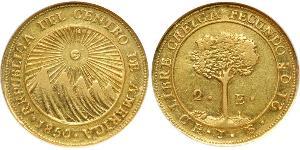
- Independence Era Tokens: The earliest notable local currency appears during the transition period from Mexican Empire to Federal Republic. These low-denomination pieces represent the birth of a new nation's ability to finance its own infrastructure and economy without foreign intervention, often featuring designs influenced by contemporary Mexican art.
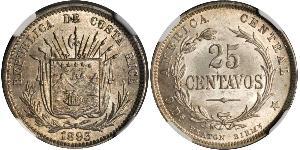
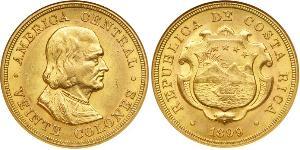
The most iconic early production is the silver coin minted shortly after independence (post-1847) which introduced republican iconography. These coins replaced Spanish royal imagery with national emblems or portraits of presidents, signaling a break from colonial rule to democratic governance.
- Coffee Nickel Issues: Perhaps the most historically valuable for understanding Costa Rica's economic rise are copper-nickel (Cob) issues produced throughout the early 20th century. These small coins reflect the agricultural boom of coffee exports and feature simple, practical designs intended to facilitate commerce in rural markets where silver was too heavy.
In more recent decades, coinage has shifted focus from trade denominations to high-quality bullion rounds (gold and platinum) featuring national heritage themes. The Blue Morpho butterfly often appears on these pieces as a representation of the country's biodiversity, while other issues celebrate its Olympic participation or specific natural landmarks.
Cultural Legacy
The coins minted by Costa Rica serve as microcosms of the nation itself—diverse and nature-focused. Unlike neighbors that emphasized conquest imagery or military might on their currency (which was impossible given this country's abolition of its standing army), these pieces reflect a focus on agriculture, peace, and environmental preservation.
The "Green" identity is not just political but numismatic; designs frequently feature flora like the Jade Jaguar tree motif used to symbolize strength from nature. This stands in contrast to other regional issues that might highlight volcanoes or military heroes; instead, Costa Rican coins tell a story of how humans can coexist with fragile ecosystems while maintaining economic prosperity.
For Collectors
For the discerning collector, acquiring material from this region offers access to a distinct segment of Central American history that is often overshadowed by more common numismatic staples. These pieces are historically significant for their rarity in early 20th-century mintings and provide a window into how nations without standing militaries can build wealth through diplomacy and sustainable development.
The focus on high-quality modern issues featuring national heritage themes makes these coins highly desirable to those interested in ecological collecting or the history of Latin American democracy. The country's reputation for human rights and environmentalism is physically encoded in its coinage, providing a unique narrative that separates it from the traditional bullion-focused numismatic markets.
In summary, while perhaps less abundant than issues from Mexico City or Paris minted during European colonial eras, Costa Rican currency holds immense cultural weight. Every piece carries the legacy of a nation chosen for its stability and beauty, offering collectors a tangible connection to one of Latin America's most progressive histories.