| View |
| preceded by | |
 Comoros (1975 - )
|
| succeeded by |
| Comoros (1975 - ) | Link to Wikipedia |
The Union of the Comoros: History, Coinage and Collectibles
Historical Background
To understand the numismatic soul of the Comoros, one must first walk through its history as a maritime intersection point in the Indian Ocean. For centuries before European arrival, these islands served not merely as geographic markers but as cultural crossroads where seafaring Arab traders and Austronesian sailors intermingled their traditions. The island's story is etched into mythology as much as it is written in stone; legend speaks of a jinni dropping a jewel that formed the Karthala volcano, creating the heartland of Ngazidja (Grande Comore). This volcanic core became not just a physical landmark but the source of enduring imagery that would eventually grace currency.
The islands evolved from isolated settlements into major hubs on ancient trade routes. By the medieval period, they had become part of the Swahili cultural and economic complex. They were linked to Kilwa in Tanzania, Sofala, and Mombasa through a network exchanging coral, ambergris, gold, and ivory for Asian goods. It was this thriving maritime commerce that created an economy reliant on exchange value long before modern banking systems existed. The gradual conversion of the population to Islam further solidified cultural connections across the oceanic expanse.
The colonial period marked a shift in political alignment but also influenced how wealth and trade were formalized through money. When France established control, particularly over Mayotte initially and later the other islands, it integrated the region into its own monetary sphere. However, for collectors of history rather than just metal content, the significance lies not solely in gold or silver holdings from a long-past era—which was minimal due to the small size of the territory—but rather in how these coins reflect the island’s resilience and distinct identity as they moved toward autonomy.
Currency and Coinage History
The story of money on the Comoros is one of transition, mirroring its journey from scattered sultanates to a unified sovereign state. For much of the region's recorded history prior to modern independence in 1975, the archipelago was closely tied administratively and economically with French territories. Consequently, it operated within the system that eventually became known as the CFA Franc zone for other regions.
This colonial connection meant that coins circulating on the islands were initially issued by metropolitan authorities or local branches acting under their direction. For early collectors of African numismatics from this era, understanding these issues requires looking at them not just as French currency stamped with different names but as artifacts representing a distinct island culture trying to carve out its own space within an empire.
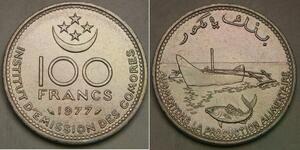
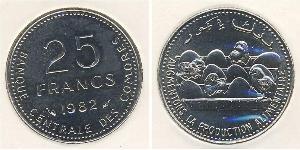
The true birthmark of Comorian sovereignty arrived in 1975. Upon independence, the need for national currency became paramount. This was less about minting vast quantities of bullion and more about asserting political identity through economic symbols. The nation introduced a new unit of account to replace colonial currencies. While small island states rarely established their own heavy-duty mints immediately, they began issuing commemorative pieces that celebrated local heritage: the Karthala volcano, the national flag's colors (green, yellow, red), and agricultural products like vanilla.
Mints and Coin Production
For a nation of such small size—only about 1,659 square kilometres—the concept of running its own state mint required resources not always available. Instead of building massive domestic operations from day one, the Comoros joined forces with regional partners in West Africa to standardize production.
This cooperative effort allowed for the release of circulating coinage that adhered to international standards but featured localized designs. This was a pragmatic necessity: it ensured stability while fostering economic growth through trade with neighbors like Madagascar and Tanzania. Production centers often relied on contract minting services, allowing collectors to find varieties in different metals—copper-nickel alloys for daily change and gold or silver proofs for special issues.
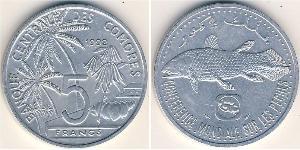
The artistic characteristics of these coins are the true treasures here rather than weight or metal purity alone. The small scale meant that every design choice had high symbolic value. Artists were tasked with distilling complex cultural traditions into the limited space available on a 20-centime piece or commemorative gold bar. They turned to nature: illustrations of tropical birds, floral motifs like Ylang-Ylang flowers used in perfume making across the islands, and depictions of volcanic landscapes.
Notable Coins
In any numismatic collection involving this region, attention often turns toward specific commemorative issues rather than daily circulation coins which were eventually superseded by modern note denominations. One class of particular interest for enthusiasts is the silver proof set issued around 1978 to mark the establishment of sovereignty.
- The Independence Commemoration: Early sets often featured imagery representing a break from colonial ties and a look toward new horizons in Indian Ocean trade. These coins frequently included symbols like palm trees and rising suns, mirroring national flags but with intricate detailing typical of proof production.
- Nature and Agriculture Series: Following the initial independence issues, mints released series focusing on local exports such as vanilla. To a collector examining these pieces, this is not just currency; it is an economic history lesson in miniature showing what allowed these islanders to survive against odds of poverty and isolation.
- Volcanic Imagery: Later issues frequently utilized the Karthala volcano—a geological wonder formed millennia ago—as a central motif. This was distinct from other regions where coins depicted castles or ancient ruins; here, they celebrated active geology and volcanic resilience.
Cultural Legacy
The coinage of the Comoros stands as an enduring testament to its unique culture. It tells a story that blends Arab heritage with Bantu influences from East Africa and Austronesian maritime traditions. The fact that it is entirely in the Southern Hemisphere but still connected deeply through trade links creates a singular numismatic niche distinct from North African or Middle Eastern coinage.
The symbols chosen were not merely ornamental; they represented national values. Islam, which serves as the state religion and predominant faith, influenced design sensibilities—often leading to motifs of calligraphy, floral patterns avoiding strict figural depictions in certain periods (common across Muslim nations), or representations of unity among different ethnic groups found on the islands.
For collectors
Why does this small archipelago remain important for modern coin enthusiasts? It offers a window into African history that goes beyond major continental powers. While it may not produce massive gold ingots like ancient empires, its coins are significant because they document the economic journey of nations rising from colonial dependency to self-determination.
The collectibility stems largely in art and scarcity; many issues were released with limited production runs for international sale before being absorbed into local markets. For collectors seeking educational pieces about African numismatics outside Egypt or West Africa, these coins provide a vital missing link in the historical timeline of Indian Ocean trade. They are small artifacts that carry vast cultural weight: every edge and engraving tells part of the story of an island nation forged by volcanoes and sustained by its people.