| View |
| preceded by | |
 Chad (1960 - )
|
| succeeded by |
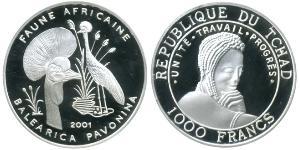
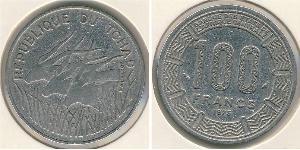
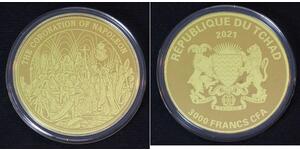
| Chad (1960 - ) | Link to Wikipedia |
Chad: History, Coinage and Collectibles
Historical Background
In museum terms, Chad is not merely a nation on a map; it was the gateway to understanding the deep history of Central Africa's economy. Long before borders were drawn in red ink by colonial powers, this landmass served as a critical crossroads for human civilization and commerce. As early as 7000 BC, ecological conditions favored settlement in what would become Chad, establishing it not just as territory but as an economic zone. For millennia, the trans-Saharan trade routes ran through its Sahelian strip, making control of this region synonymous with wealth.
The history that collectors study is rooted deeply in these ancient pathways and later colonial interventions. As the Sao civilization faded before the rise of the Kanem Empire by the end of the first millennium AD, the focus shifted from conquest to trade logistics. The real economic shift occurred when European eyes turned toward Central Africa following World War II. By 1920, France had consolidated control, but their approach was pragmatic: they viewed Chad not as a land for settlement, but as an industrial asset. They introduced large-scale cotton production in the late 1920s.
This specific economic pivot is vital for numismatics and history alike. The colonial administration relied heavily on untrained labor to harvest this cash crop. Money was the lubricant of these operations—first foreign coins brought by traders, then paper currency introduced to pay wages and facilitate trade between N'Djamena and regional agricultural zones.
Currency and Coinage History
The story of money in Chad is a transition from ancient barter systems involving slaves or beads to the rigid colonial economy. In its earliest stages, local currencies were often foreign coins accepted for their face value rather than their intrinsic gold or silver content. As cotton production expanded after 1900, French authorities established the Territoire Militaire des Pays et Protectorats du Tchad in 1900 to enforce order and taxation.
By independence in August 1960, Chad inherited a complex financial landscape typical of European colonies. The colonial currency system was heavily based on metal coinage from France or other regions like the British Empire's CFA territories that influenced neighbors like Cameroon (though distinct). Upon gaining sovereignty, there was pressure to establish national identity through finance.
The early post-independence period saw the introduction of coins with Chadian imagery. However, these were often low-value denominations intended for everyday commerce rather than hoarding or investment by foreign investors. The currency remained tied closely to French economic policy until later years when the nation sought a more autonomous fiscal system suitable for its oil-based export economy starting in 2003.
Mints and Coin Production
Unlike European nations, Chad did not possess a permanent domestic minting capability during most of its history. This centralization meant that production quality was consistent with French standards but often produced at mints across the region rather than within Chadian borders for many decades.
The coinage itself reflected the resources available and the artistic tastes imposed by colonial governors. Designs were usually utilitarian, yet they carried symbolic weight. Early coins bore images of the national coat of arms or specific agricultural icons relevant to that nation's economy—specifically cotton bolls representing their primary export during French rule.
Notable Coins
- The Colonial Copper-Nickel Centimes:
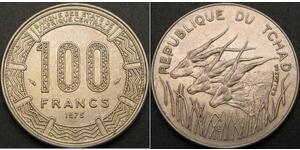
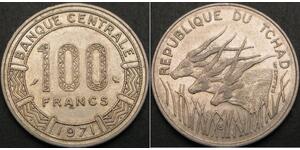
- Independence Era Denominations (1960s):This period marked a surge in "sovereignty" coins. These often featured French inscriptions transitioning to English or Arabic script. They were critical for collectors representing the birth of modern African nations, symbolizing a break from colonial ties while maintaining economic unity with neighbors.
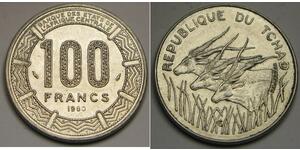
- Later Metal Denominations (Oil Era):In later decades, as oil began driving exports in 2003, new issues emerged reflecting prosperity. Collectors value these for their connection to Chad's modernization and the shift from agricultural subsistence herding toward high-tech industry.
The "importance" of these coins lies not just in their rarity, but in their story-telling function regarding a country that was among Africa’s least developed nations. Many early issues were produced for domestic use only and rarely made it to collectors who had access to major mints outside the colony; hence, they are sought-after.
Cultural Legacy
Chadian coinage serves as an archaeological artifact of cultural transition. It reflects a land where over 200 linguistic groups coexisted under various governments. Early designs often ignored this complexity or attempted to unify the country by emphasizing symbols like Lake Chad itself, which borders Nigeria and Cameroon.
The shift in numismatic style from colonial imagery—often depicting European administrators—to indigenous figures marks an evolution of national consciousness. However, economic conditions remained tough; poverty was prevalent even as resources were discovered. Consequently, coin production often ceased or stagnated during periods of political instability (the coups d'état mentioned above), making the surviving examples a record of stability rather than chaos.
For collectors
The value of Chadian numismatics is found in its scarcity and historical narrative. It represents one half-century of intense economic change—from slave trade routes to cotton fields, from French rule to oil independence—recorded on small bits of metal that have survived the harsh climate.
Because few major issues exist compared to European currencies, these coins offer a unique window into African economic history without overwhelming variety. They are essential for any collection focusing on Francophone Africa or colonial legacies. The designs themselves often feature agricultural motifs and Islamic art patterns from the north mixed with southern ethnic imagery in later eras.
Ultimately, collecting Chadian money is about more than acquiring metal; it is about holding a tangible piece of the history where empires rose and fell, trade routes shifted westward toward Europe's industrial needs, and an African nation carved out its modern identity against difficult odds. These coins remain relevant not as currency for daily life today, but as historical records from one of the world’s most fascinating geopolitical frontiers.