| View |
| preceded by | |
 Cameroon (1960 - )
|
| succeeded by |
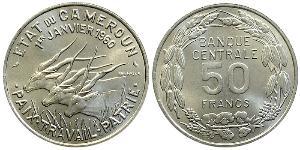
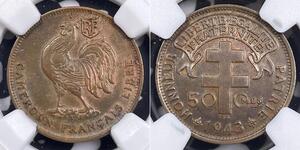
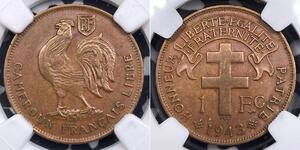
| Cameroon (1960 - ) | Link to Wikipedia |
Cameroon: History, Coinage and Collectibles
Historical Background
The journey of the Republic of Cameroon begins long before a single coin was minted in its name. The land itself is defined by its location as an Atlantic-facing crossroads between West Africa and Central Africa, often described within historical circles as holding the distinct title of "Africa in miniature." This description stems from its unique geological features ranging from coastal beaches to high volcanic mountains like Mount Cameroon. Originally, this region was known by Portuguese explorers who arrived at the Wouri River estuary around 1472.
The name reflects a vibrant natural history tied directly to trade and commerce. The early inhabitants traded local goods along these rivers before European arrival standardized that exchange through currency systems. By 1896, significant cultural shifts occurred locally with the creation of the Bamum script by Sultan Ibrahim Njoya, representing an indigenous intellectual tradition that eventually influenced how national identity was visually represented in art and later on paper money.
The geopolitical landscape changed dramatically following global conflicts. Under German administration from 1884 until World War I, Kamerun became a colony defined by plantation economies based on palm oil, rubber, and cocoa production. These commodities moved through coastal ports like Douala, establishing the trade networks that would later require standardized monetary units to function effectively.
Following the defeat of Germany in 1918, the League of Nations divided these territories into French mandates and British-administered regions. This division fundamentally altered economic relations; France integrated the local economy with the metropole, while Britain administered from neighboring Nigeria. The transition period created a complex monetary environment that eventually evolved into national independence.
Currency and Coinage History
The evolution of money in this region mirrors its colonial divisions. During the German era, coin circulation was initially tied to imperial standards but adapted for local commerce through forced labor regulations governing plantations where goods were exchanged rather than sold immediately with cash.
After 1919 and the division between French Cameroon and British Southern Cameroons, two distinct monetary traditions emerged. The French side aligned its currency closely with the CFA franc system that would eventually dominate West African trade post-independence. In contrast, the British territory utilized currencies linked to the Nigerian pound standard before unifying under a federal arrangement.
Independence in 1960 marked a critical turning point for numismatics and economics. As French Cameroun gained sovereignty and Southern Cameroons federated with it shortly after, the monetary systems had to be harmonized to ensure trade stability across borders. The establishment of the United Republic of Cameroon in 1972 further necessitated a unified currency policy that abandoned previous British colonial distinctions.
The transition involved issuing new series of banknotes and coins bearing national symbols rather than colonial imagery or flags from other nations. This shift was not merely administrative; it represented a psychological break where the physical economy began to support an identity separate from former imperial powers, though trade connections remained strong due to geographic necessity.
Mints and Coin Production
Cameroon itself has historically lacked a domestic minting capability for much of its colonial and early post-colonial history. Most coinage produced during the mandate periods was struck at official mints in Paris or London, shipped overseas to reflect the administration's authority.
This reliance on foreign production centers means that collectors often encounter French Art Deco styles or British Imperial designs stamped with local place names like Douala on their edges or reverse fields. The artistry of these pieces reflects a blend: standard European craftsmanship combined with localized subjects such as palm groves, rivers, and maps depicting the Atlantic coastline.
The post-independence era saw changes in production contracts and design mandates. As sovereignty was solidified, designs became more reflective of national heritage, utilizing motifs found across diverse landscapes—from savannas to rainforests—visible on circulating currency rather than military or royal effigies common elsewhere at the time.
This reliance initially meant limited availability for local collectors seeking original strike material. However, as production volumes increased and new technologies were adopted in partnership with industrial partners like France, coin designs became more standardized across Francophone Africa during later decades of national consolidation.
Notable Coins
- The German Kamerun Issues:
Coinage from the pre-World War I era remains highly valued. These pieces often carried marks indicating their use in specific regions for trade with plantations and local markets.