| View |
| preceded by | |
 Bhutan
|
| succeeded by |
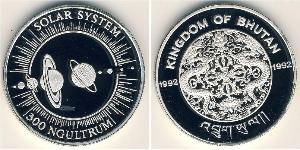
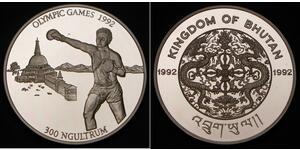
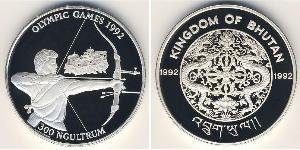
| Bhutan | Link to Wikipedia |
Bhutan: History, Coinage and Collectibles
Welcome to our gallery where the history of a Himalayan kingdom meets its numismatic legacy. Today we journey into Bhutan, often called "the last Shangri-La" in popular imagination but known more soberly by scholars as one of Asia's great closed-door states for centuries before finally opening its borders to the world.
Historical Background
Bhutan is a small nation nestled within the eastern Himalayas. For much of recorded history, it has existed in a delicate equilibrium between two massive neighbors: Tibet and India (specifically, Nepal and Sikkim historically). This geopolitical location made Bhutan a buffer state rather than an imperial power. Its history is defined by attempts to maintain its identity and sovereignty amidst the shifting tides of Central Asian empires.
The economic life of medieval Bhutan was largely agrarian and trade-based via small-scale routes connecting it with Tibet. The introduction of foreign currency began significantly in the early 19th century when British expeditions into the Himalayas brought traders to Lhasa and other border towns carrying Indian coins that found their way up the mountains.
The era most relevant for our collectors today is post-World War II, particularly following the Indo-Bhutan Treaty of Friendship in 1948. Bhutan was never colonized but came under British "sphere of influence" after India's independence from Britain; this treaty preserved Bhutanes sovereignty while establishing a framework for economic stability involving Indian currency.
Currency and Coinage History
British influence in the late 19th century left a unique mark on South Asian numismatics: foreign coins circulated freely across the entire Himalayan trade routes. Before Bhutan could establish its own minting capabilities, it relied heavily upon the circulation of Indian rupees and Nepalese rupias found within local markets.
The first official coinage for Bhutan dates back to 1950s when King Jigme Wangchuck established a centralized monarchy. Initially, these were small copper pieces minted locally or produced by neighboring artisans under state supervision. However, the most significant development came in 2003.
The first truly independent Bhutanese coins appeared around this time and have been continuously issued ever since to celebrate various themes of national significance including religious figures, cultural landmarks, flora, fauna (like the famous Red Panda), and historical events like the coronation ceremonies. The evolution was rapid; by 2017 they introduced modern polymer notes alongside metal circulation.
Mints and Coin Production
The history of Bhutanese coinage is a testament to its journey toward self-sufficiency in minting operations. Initially, production depended on external assistance but the state established local facilities that allowed for control over iconography—using traditional motifs alongside modern designs.
Bhutan's coins are distinct because they often use gold and silver alloys rather than just base metals, emphasizing their role as commemorative pieces more so than circulating currency (though lower denominations still function in daily transactions). The Royal Mint of Bhutan has been central to this process since its early establishment, overseeing all metal production.
The designs are intricate but often subtle compared to Western issues; they favor religious iconography—the Buddha's face—and local architecture over purely industrial or political imagery common elsewhere. This artistic direction reflects a culture deeply rooted in Buddhism and tradition even as it modernizes economically.
Notable Coins
The 2017 Independence Coin:
- Historical Context: To mark the centenary of independence or significant national anniversaries, Bhutan issued coins with high artistic merit.
- Design Features: These typically feature images of Buddha Vairocana on one side and the emblematic Druk (Thunder Dragon) flag elements surrounding a central inscription in Dzongkha script alongside English translations for international markets.
The Red Panda Series:
- Historical Context: Following global recognition of Bhutan's successful reforestation and biodiversity conservation efforts, the government minted a series highlighting native wildlife to promote eco-tourism awareness.
The Crown Coins (10 Ngultrum in Silver):
- Historical Context: Celebrating the unification of Bhutan or royal anniversaries, these often feature high-quality finishes suitable for proof sets and are highly coveted by collectors interested in Himalayan numismatics.
Cultural Legacy
Beyond the material value lies a rich cultural narrative. The coins act as small canvases of Bhutanese history, culture, and religion reflecting themes such as Buddhism (depicted with traditional motifs), national resilience through border disputes or independence celebrations.
The Druk (Thunder Dragon) remains an enduring symbol—both on flags and currency representing strength yet harmony with nature. By issuing coins that feature local festivals like the Tshechu festival, Bhutan uses its numismatic output to share intangible heritage rather than just promoting exports or tourism statistics alone.
For Collectors
Bhutanese coinage offers a fascinating entry point for collectors who prefer unique cultural themes found nowhere else in Asia. While circulation coins remain common, the early issues (post-1970s) and high-value gold or silver medals issued on special occasions provide significant rarity potential.