| View |
| preceded by | |
 Benin
Benin
|
| succeeded by |
| Benin | Link to Wikipedia |
Benin: History, Coinage and Collectibles
Welcome to a deeper exploration of one of West Africa's most captivating monetary histories, the modern Republic formerly known as Dahomey, and its rich cultural past.
This article invites coin collectors and history enthusiasts alike to step behind the glass cases in our historical halls. We do not simply list dates; we interpret how a nation evolved from ancient trade powers through colonial integration into independent sovereignty. The journey of this currency is one that reveals much about the broader economic currents of Africa during the twentieth century.
Historical Background
To understand Benin, or the Dahomey Kingdom as it was known for centuries prior to 1960, we must look beyond mere borders. This territory served historically as a bustling hub in West African commerce, connecting interior trade networks with Atlantic coastal ports long before colonialism took hold.
During its apogee as an independent kingdom under the reign of kings like Ghezo and Behanzin, this region controlled vital routes for palm oil production and agricultural exports. Money was less a manufactured necessity in earlier eras than it is today; barter systems based on cowrie shells were common throughout much of West Africa at that time.
The introduction of European trade changed these ancient rhythms significantly. The slave trade, followed by the extraction of rubber, palm kernels, and cocoa, eventually brought foreign coins into circulation for tax payments and wages within a local economy. Following World War II, France moved to standardize currency throughout its empire, transitioning Dahomey from a semi-autonomous protectorate to an integrated colony.
The shift in monetary policy mirrored the changing political landscape of post-war colonialism. By 1960, when independence was achieved and the nation took the name Benin, it needed to reconcile French Franc CFA currency usage with its desire for sovereign identity. This period marks a fascinating transition from foreign coinage stamped locally or imported in bulk to issues that began reflecting national pride within the rigid structure of colonial economic zones.
Currency and Coinage History
Moving toward independence, money was still largely controlled by France through banking institutions such as the Banque de l'Afrique Occidentale. However, a crucial development occurred when French West African colonies began to issue their own versions of standard currency for internal circulation.
In 1960 and following years, coins were minted bearing specific legends indicating local sovereignty while adhering strictly to the Franc CFA monetary system requirements set by France until reforms in later decades. These early issues are often overlooked but hold immense value as proof that a nation had its own government capable of legal tender.
As the 1970s progressed, and after significant political stability returned following internal changes during the 1964–83 era which allowed for economic recovery under certain regimes, the mints began to produce more distinct varieties. This evolution was not merely a matter of changing metal content or design but represented an assertion of cultural autonomy on global trade floors.
Mints and Coin Production
It is important to clarify where these objects were born before they entered circulation in the port cities of Cotonou, Porto-Novo, and Abomey. For a considerable portion of its colonial history, physical production occurred overseas at major Paris minting facilities because local infrastructure was not fully capable.
This reliance on foreign technology meant that artistic styles often leaned toward French neoclassical traditions until the state had the autonomy to commission artists trained in modern African aesthetics or Western education. Over time, however, distinct visual themes emerged representing local flora and fauna rather than generic imperial imagery like the Gauls or classical Rome.
The production quality improved significantly once Benin developed its own capacity for metal strikes within a localized context later in the seventies and eighties. This shift allowed designs that reflected not just statehood but cultural heritage, using high-purity alloys to create durable numismatic artifacts intended for commemorative events rather than mass daily circulation.
Notable Coins
- The 1960 Independence Issue: Perhaps the first of real significance is the independence issue. These often featured a portrait associated with national heroes or abstract symbols representing unity and trade, typically in denominations such as one franc, five francs, ten francs.
- Cultural Heritage Series (1975): Following internal stabilization under specific administrations later in 20th century, commemorative coins were struck. These featured themes of traditional dress, musical instruments like the guitar or talking drum, and agricultural scenes such as rice farming which was central to local food security at that time.
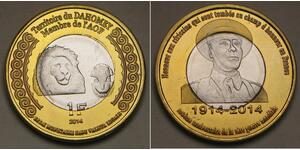
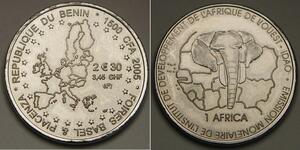
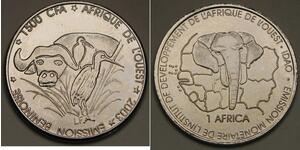
- Limited Mintage Editions: For modern collectors seeking rarity, one might look toward issues tied specifically to anniversaries of key historical events rather than purely generic circulation. These were often minted in proof qualities with distinct artistic finishes not found on standard bullion types available for general commerce.
Cultural Legacy
The coinage left a lasting mark reflecting the country's journey from barter economies to modern digital banking infrastructures. While we have moved away from physical currency, coins remain tangible links connecting present collectors with historical moments that shaped West Africa.
These metal artifacts served as propaganda tools and educational instruments alike in schools where they helped children learn their own national history. In a land rich with oral tradition, these coin designs became visual records of the past for those who could not read French texts initially available only to literate administrators or officials at state banks.
For Collectors
This historical region remains an essential area of study within West African numismatics. The evolution from cowries and imported silver coins to CFA Francs allows collectors to trace the political shifts that defined modern Africa without relying solely on text-based history books which often omit local perspectives.
Rare finds include early 1960 circulation strikes marked with specific regional names or limited mintages commemorating cultural achievements. Whether you are interested in a complete set of CFA issues for display purposes, seeking to acquire commemorative pieces celebrating agricultural milestones, or studying how foreign influence altered domestic design styles before independence was fully claimed visually through coinage, there is much to explore.
In summary, the legacy here extends beyond simple transactions. They tell stories about trade routes that once connected interior villages with Atlantic ports and helped define what it means for a small African nation to assert its identity in an interconnected global economy.