| View |


| Bengal ( - 1947) | Link to Wikipedia |
Bengal: History, Coinage and Collectibles
Welcome to our exploration of the rich monetary history of Bengal, a region that once served as one of the great engines of commerce in Asia. As we step through this gallery of artifacts from Bengal, you will see not merely metal objects, but snapshots of empires rising and falling along the banks of the Ganges.
Historical Background
To understand the coins that circulated here for centuries, one must first appreciate the geography. The region we call Bengal was historically defined by its immense alluvial delta fed by three major rivers: the Padma (Ganges), Meghna, and Brahmaputra. This fertile land created a natural magnet for trade routes connecting India to the Bay of Bengal.
Beneath this surface lay dynasties that ruled before they were subjugated. The region was home to powerful Buddhist kingdoms like the Pala Empire (roughly 750–1160 AD) and Hindu states such as the Sena dynasty, where local coinage often bore Sanskrit inscriptions denoting victory over enemies or donations to temples.
The trajectory of power shifted decisively in 1204 with the arrival of the Muslim conquest led by Bakhtiyar Khalji. This marked a transition toward Islamic numismatic traditions that would eventually dominate Indian coinage for five hundred years. Later, Bengal became an integral part of the Mughal Empire following its annexation by Akbar in the late 16th century.
This integration brought stability but also immense wealth extraction to Delhi and Agra, leaving local administrators with their own financial responsibilities that often necessitated private minting or authorized coin production. By the seventeenth century, Bengal had become a primary source of revenue for emperors, yet by 1750s it would find itself increasingly under pressure from European traders whose economic dominance could no longer be ignored.
Currency and Coinage History
The story of money in this region follows the trajectory found across much of India: a transition toward silver. While ancient currency included copper coins known as Karnavanka, these were eventually phased out due to inflation caused by European debasements during times of war.
Mughal coinage established a standard that lasted for generations. These Silver Rupees (called Rupiya) served two purposes: they circulated in the markets, and large denominations called Damans were used exclusively to pay soldiers and government salaries. However, by 1759, local zamindars or land-owning lords began producing their own silver coins.
These private issues usually lacked official dates but displayed the portrait of a Mughal emperor alongside titles referring to Bengal's governor. When the British East India Company gained ascendancy following the Battle of Plassey in 1757, they took control over these minting rights. The first major reform was issued by John Shore and later Lord Cornwallis.
The new currency introduced a high silver standard intended for uniformity across all three presidencies (Madras, Bombay, and Bengal), yet local mints in this region often continued the aesthetic traditions of their Mughal predecessors until the Company reorganization forced them to adopt strictly British styles. This period is crucial for numismatics because it represents the "hybrid" era where Eastern calligraphy meets Western design elements.
Mints and Coin Production
The primary production centers in this region were located at Dhaka (then spelled Dacca), Purana Pora, Chittagong, Satkalia, and Rajmahal. The location of the Dhaka mint was particularly significant; it stood on a site once occupied by an older Mughal establishment.
In those times, coinage technology had matured to include sophisticated engraving for calligraphy while retaining high-quality strikes in silver. The artistic characteristics distinguish Bengal issues from other parts of India: they tend to feature bold lettering and distinct borders that often incorporated floral or geometric motifs inspired by the region's famous textile designs.
The copper coins (kaanchi) struck at Dhaka were particularly well-made, bearing inscriptions in Bengali as well as Persian. These coins served a unique role because they circulated not only within Bengal but across East India Company territories, effectively unifying trade between Calcutta and the Burmese or Chinese markets.
Notable Coins
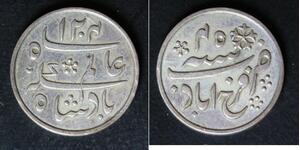
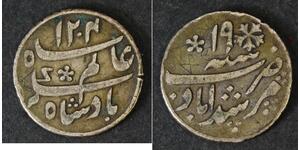
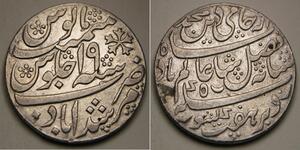
We begin our examination with one of the most revered silver types: The Mughal Rupee. These coins usually bear a Quranic verse in calligraphic script along the rim, representing spiritual piety combined with royal power. Collectors prize these early issues for their sharpness; they often feature an unobstructed field between legends.
Moving into the British period, we see high silver Rupees of 1 rupee denomination minted at Dhaka and Satkalia during Sir John Shore's reforms in 1790. These are historically significant because they show a return to pure weight standards based on historical models rather than debased coins. They feature specific portraits including the British monarch but utilize traditional Indian styles.
We must also mention gold mohurs minted in Calcutta and Dhaka, where local issues often featured designs reflecting Bengal's natural beauty—peacocks (a symbol of royalty) or lotus flowers alongside royal effigies. These coins served as reserves for the treasury rather than daily circulation currency.
Cultural Legacy
The coinage from this region serves as an artifact that encapsulates centuries of religious coexistence and artistic exchange. The calligraphy found on these silver pieces reflects the deep influence of Persian culture upon local traditions, yet often includes vernacular scripts like Bengali or Assamese.
Ceremonial coins were used for paying Taxi duties to government officials in a symbolic capacity rather than purely economic exchange. In some cases, these items served as status symbols within elite households of the Bengal nobility and zamindars who commissioned them privately or received gifts from the court.
Beyond material value, we see how the coinage preserved regional identity through unique borders—often a double border filled with intricate lattice patterns derived from local jali work found on windows. These designs link back to architectural heritage that collectors can trace today in historical palaces and mosques of Dhaka and Chittagong.
For Collectors
Bengal remains an important chapter for the collector because its minting output provides a complete narrative from pre-modern Indian history through British colonial consolidation. The region produced high quality silver that stands out against more debased coins found elsewhere in India or Southeast Asia during times of currency crisis.
If you are looking to expand your collection beyond strictly "British Colonial" examples, Bengal's coinage offers a bridge between ancient dynastic power and the modern economic order. The combination of historical significance—tied directly to major trade shifts—and artistic merit makes this region an essential component for those studying monetary evolution in South Asia.
We invite you to appreciate these small artifacts that once carried immense value, crossing oceanic distances to facilitate international commerce with China and Europe while simultaneously maintaining the spiritual integrity of a civilization deeply rooted along the rivers of Bengal. The story told by every edge or inscribed date is one of resilience, trade, artistic pride.