| View |
| preceded by | |
| Ancient British |
| succeeded by |
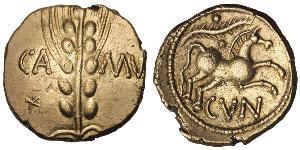
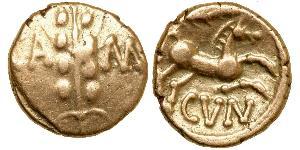
| Ancient British | Link to Wikipedia |
The Ancient Britons: History, Coinage and Collectibles
Historical Background
The landscape of ancient Britain was shaped by a rich tapestry of cultures that evolved from the British Iron Age until the establishment of Romano-British civilization. Early inhabitants were not merely passive subjects but active participants in vast continental networks, particularly with Gaul and Belgica. These trade routes established along the northern coastlines facilitated an exchange of goods that eventually necessitated standardized currency to overcome barter limitations among powerful tribal kingdoms like the Durotriges or the Iceni. As Roman influence grew following 43 AD, Britain transitioned from a collection of independent polities into a formal province known as Britannia. This political shift altered local economies entirely. Trade routes now extended beyond regional boundaries, importing silver bullion and minting standards directly linked to Rome itself. The convergence of Celtic heritage with Imperial administration created unique monetary zones that collectors seek today. Understanding this transition from isolated Iron Age settlements to integrated Roman provinces provides essential context for appreciating the artifacts held in private collections.
Currency and Coinage History
Monetary systems evolved dramatically across these isles during their ancient history. Early economies relied on cattle, shells, and metal bullion until contact with Mediterranean traders introduced concepts of fixed-value currency. By the first century AD, tribal gold staters were circulating as legal tender within specific regions before Roman conquest fully established a silver standard based on the Imperial Denarius. The introduction of provincial coinage allowed for tax collection in standardized units to fund military campaigns across Hadrian's Wall and beyond. As the empire expanded its administrative reach into Britain, local rulers saw their privileges curtailed by imperial decree regarding currency usage. Eventually, under Vespasian during his reign as a Roman Emperor, standard silver issues were introduced with specific imagery celebrating Britannia's status within Rome. This period represents a critical transition for numismatists where local traditions briefly coexisted before being absorbed into the larger Imperial production cycle.
Mints and Coin Production
In ancient Britain, fixed mints did not exist initially; rather coinage was often produced itinerantly or in strategic military forts. Artisans working within fortified centers would strike issues featuring local motifs such as gallic animals alongside Roman lettering techniques brought across the English Channel. The production of silver provincial coins required significant infrastructure to maintain consistency in weight and metal purity, which is rare for early finds due to their precious nature and high melt value compared to later base-metal copper types found elsewhere. Artistic styles remained deeply rooted in La Tène designs before being adapted by Roman influence; borders often featured stylized knots or zoomorphic heads common to Celtic art traditions rather than purely Imperial profiles. Later workshops under Antonine dynastic rule standardized these processes at locations like Viroconium, shifting production from mobile striking centers to permanent facilities overseen by imperial governors. These technological shifts are visible in the transition of weight standards which became stricter over time.
Notable Coins
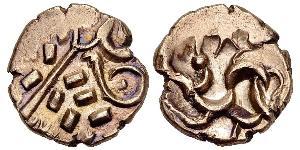
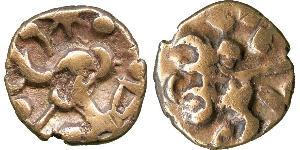
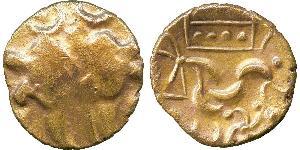
- Tribal Gold Staters: Produced before full Roman control, these pieces feature native chieftains claiming divine status with animal head motifs like horses or stags. Collectors prize them for their gold content and the historical window they offer into pre-Roman power structures.
- Flavian Provincial Denarii: Issued during Vespasian's rule, these coins bear legends such as BRITANNIA alongside symbols of victory trophies held by a personification representing Britain. They are highly sought for their connection to the first formal minting operations within imperial borders.
- Celtic-Roman Transition Issues: Early post-conquest issues often display hybrid designs mixing traditional Celtic art with Latin script or Roman portraiture styles of Hadrian and Trajan, marking the cultural synthesis in coinage production before standardization was complete.
Cultural Legacy
The imagery stamped onto ancient coins serves as a permanent record of the culture that once thrived within these borders. Early designs often featured druids or Celtic warriors depicted holding staffs alongside Imperial eagles, reflecting religious syncretism between native traditions and Roman state worship. As political unity strengthened under imperial oversight, local symbols gradually gave way to standardized representations of the Emperor's image across Britannia. The disappearance of independent coin production in Britain during later centuries signals a profound cultural shift associated with changing economic tides following Saxon settlement. Numismatic scholars analyze these shifts to understand how identity was constructed through money and public display. Even modern preservation efforts highlight that ancient gold finds represent wealth accumulated over generations, preserving the legacy of trade routes long abandoned by maritime explorers.
For collectors
Ancient British coinage remains a cornerstone for serious numismatists due to its scarcity and historical significance. Unlike Roman coins from major mints in Europe or Rome itself which were minted en masse, early provincial issues had limited circulation lifespans before being withdrawn by imperial edicts. Condition rarity plays a vital role here as many pieces have been melted down over the centuries for bullion needs during medieval times. While modern legislation now protects archaeological deposits found on British soil and restricts trading of artifacts less than 300 years old, historical specimens from this ancient era are legally available to collectors through auctions or private sales provided they were obtained before protection laws took effect in later periods. Each piece tells a story about tribal autonomy transitioning into imperial order. Collectors seeking depth over quantity find that studying the transition styles of local art under Roman rule provides unique insight not seen elsewhere in classical antiquity.