| Sehen |
| vorangegangen von | |
 Kokosinseln
|
| gefolgt von |
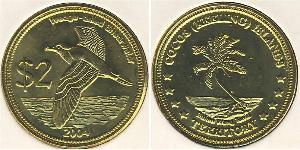
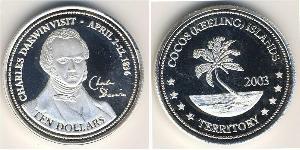
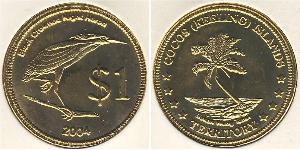
| Kokosinseln | Link zur Wikipedia |
Kokosinseln: Geschichte, Münzprägung und Sammlerstücke
Welcome, dear visitors of our digital archive today. As a curator guiding you through this small but economically powerful corner of the Australian territories, I invite you to explore not merely geography and demographics, but rather a fascinating narrative told in metal and paper: the story of money on isolated volcanic peaks.
Historischer Hintergrund
The history of these islands is one that begins with isolation. The Keeling Islands were discovered early by mariners seeking passage routes across Indian waters, yet true human settlement only took hold through a very specific lens: trade and labor. In the mid-nineteenth century, when British colonial administration extended its reach globally, an interesting situation unfolded on these volcanic atolls. While geographically part of Australia's sphere from 1857 onwards, they effectively operated with remarkable degrees of autonomy due to their extreme isolation.
The economic survival of this remote archipelago depended entirely upon a single commodity: coconut oil produced industrially and transported by sailing vessels. This trade required its own financial infrastructure before the central currency systems were fully established on mainland Australia or in colonial hubs like Java. The social structure was tightly knit, ruled initially with an iron hand which eventually led to complex legal issues that extended their independence far beyond what neighboring colonies expected.
The islands were not merely a collection of rocks; they became a hub for the labor migration industry and trade between South Asia (Java) and Australia. This unique socio-economic position created a need for financial instruments specifically suited to local autonomy, fostering an environment where private minting or unauthorized currency issuance could flourish in the 19th century.
Geschichte von Währung und Münzprägung
In every territory there is a history of how money evolved from barter coins and notes. On these islands, that evolution was shaped by necessity rather than bureaucratic fiat. Before they were officially integrated into the broader Australian system in 1983 with currency exchange changes (though earlier integration occurred gradually), Cocos had its own monetary reality.
The earliest issuances came about due to internal colonial needs and local trade requirements, creating a unique numismatic subculture known as "private coinage" under Clunies-Ross rule. This period of semi-autonomy allowed for the issuance of coins that were distinct from standard British or Australian denominations. These early pieces served not only as money but also as symbols of self-governance.
The transition towards a more standardized currency was inevitable, driven by increasing ties with Australia and global trade standards. This shift is one we are here to appreciate today through the study of their history. The local Rupie mentioned in our archives stands not only for paper value but represents a significant era where private entities issued coins that circulated freely.
The eventual abolition of these specific regional issues, noted as occurring around 1978, marks one of those historical turning points often seen in numismatic collections. Collectors watch these dates like milestones: they mark the end of local autonomy and the absorption into modern Australian currency standards.
Münzstätten und Münzproduktion
In typical colonial contexts, coinage was minted at established mints in London or Calcutta (now Kolkata). However, on these islands during specific periods of rule by John George Clunies-Ross and his descendants, the "mints" were effectively private enterprises operating to fund local projects. These coins were often produced outside official colonial oversight.
This practice is crucial for understanding why specimens are rare today. Since production was tied strictly to internal island needs rather than national policy or large-scale exports, quantities were small by definition of the era's standards. Artistic designs on these tokens and coinages usually reflected local iconography: palm trees representing the primary export, ships symbolizing trade routes with Java, and maps reflecting their isolation.
The minting process itself was likely simple, casting coins in private workshops before they entered circulation or later being re-purposed by Australian mints upon full annexation. The lack of official facilities meant that survival depended on preserving the metal value of these pieces rather than strict monetary control laws governing their use.
Bedeutende Münzen
In our museum's virtual galleries, we highlight a few examples from this numismatic family tree: First is the Silver Dollar. While often associated with California or Mexico historically, Cocos produced its own version of high-value silver pieces used for major trade transactions.
- Cocos Island Rupie:
- This paper currency represents a bridge between local isolation and global finance. Used as the sole legal tender during Clunies-Ross' rule, it circulated alongside British sovereigns in remote trade.
- Social context: This notes are rare collectors seek to complete their series of Cocos money because they represent the only period when islands had full financial autonomy before Australian administration forced integration later on.
- Colonial Copper Pieces:
- Copper coins issued under private authority during early settlement phases are prized for their design, often featuring ship motifs or local plant imagery.
- Rarity: Many were lost over time as the population migrated to Australia post-World War II. Surviving examples in uncirculated condition represent a rare opportunity to see how these islands adapted British coinage styles while maintaining independence for generations.
- Late 20th-Century Notes:
The later transition saw the introduction of Australian Dollar denominations printed locally or issued via postal orders, which are highly sought after due to their connection with Australia's currency standard.
Kulturelles Erbe
We cannot separate this financial history from its cultural roots. Every coin and note tells a story of the islands' primary resource: the coconut palm. The imagery found on these artifacts reflects an environment untouched by industrialization until relatively late in their history, making them precious documents for historians studying remote trade patterns.
- Social Identity:
- The currency serves as a symbol of the island's unique position between Java and Australia. Coins were issued with mottos emphasizing local independence, reflecting Clunies-Ross' famous legal autonomy.
- Tourism Connection:
Even in modern times (since 1978), the legacy of this unique monetary history continues to impact collectors. The islands remain a place where culture meets commerce through tourism and conservation efforts.
Für Sammler
In conclusion, why do we dedicate space here? Because these pieces are rare not only due to low quantities issued but also because of the unique political conditions that allowed them to exist without official oversight for long periods. As a curator with experience in numismatics and global economic systems, I advise collectors focusing on remote territories:
- Rarity: These coins are extremely rare finds in private collections today.
- Intrinsic Value:
- This territory's history involves unique issues that predate full integration, creating a gap often found only by experienced collectors who can navigate the nuances of Cocos currency and Australian territories.
The islands offer a window into how trade flourishes even at extreme distances from mainland power centers through specialized local solutions.