| Ver |
| precedido por | ||||
|
||||

|
|||||||||
 Vatican (1926-)
|
|||||||||


| sucedido por |
| Vatican (1926-) | Enlace a Wikipedia |
Ciudad del Vaticano: Historia, Monedas y Coleccionismo
Welcome to our exhibition hall.
In this room stands one of the world's most unique sovereign entities. We invite you not merely as observers but as students of history and guardians of value: those who seek knowledge, preservation, and appreciation for a state defined by its spiritual mission yet possessing tangible treasures in gold and silver that bridge centuries.
Contexto Histórico
Welcome to our exhibition hall.
In this room stands one of the world's most unique sovereign entities. We invite you not merely as observers but as students of history and guardians of value: those who seek knowledge, preservation, and appreciation for a state defined by its spiritual mission yet possessing tangible treasures in gold and silver that bridge centuries.
Understanding the monetary identity of Vatican City requires first understanding the genesis of sovereignty itself. The territory exists as an enclave within Rome, but its history is distinct from Italy's imperial or republican chronicles.
The modern State was born out of a necessary legal reconciliation between faith and temporal power in 1929 via the Lateran Pacts. This accord established Vatican City not just as a political entity, but as an international diplomatic subject recognized by other nations. In that era, establishing "legal sovereignty" meant proving one could issue currency or enter into financial agreements.
In its early decades of independence (1920s–1950s), the Vatican relied heavily on Italian Lira for circulation because it lacked a physical mint capable of high-volume production. The state was too small to sustain massive trade, yet required international acceptance. This dependence fostered a unique numismatic tradition: rather than mass-producing circulating currency that would be lost in commerce instantly, the Holy See focused its efforts and resources on commemorative coinage.
This shift toward "medallions" or certificates of value was born from two practical realities:
- Pilgrimage Economics: The Vatican relies on millions of pilgrims. Providing gold or silver bullion to these visitors served as a form of economic support and spiritual blessing, functioning almost like portable religious relics.
- Diplomatic Recognition:Funding international relations with "Vatican" coins allowed the Holy See to assert its independence without needing massive industrial infrastructure inside tiny walls.
The transition from relying on Italian currency was formalized over decades, culminating in full sovereignty over monetary policy. However, unlike major economies that issue their own circulating notes and banknotes for daily transactions, Vatican City's approach remains distinct: it treats its coins largely as collectible art or functional items specifically authorized by the Pontifical State.
Historía de la Moneda y la Circulación Monetaria
The evolution of currency in this territory is a story of integration into European monetary unity while maintaining spiritual independence. For decades, "Vatican" coins were legal tender only within the city limits and by international visitors.
This distinction was vital. The Vatican needed money that represented its authority but also respected the financial sovereignty of neighboring Italy. When the euro entered circulation in 2002 for most of Europe, a crucial question arose: Could this micro-state issue coins without creating inflation or conflicting with European Central Bank mandates?
The answer was negotiated through strict adherence to European rules.
- The Euro Exception:In 2016 (and later refined in the mid-2020s), a specific exception allowed Vatican City to mint its own euro coins. These are not "commercial currency" meant for general daily spending like buying bread; they serve primarily as commemorative issues.
- Circulation Constraints:Unlike France or Germany, where the National Bank prints banknotes of denominations 50 and 100 euros with national symbols on one side and common designs (like buildings) on another, Vatican coins feature unique reverse sides depicting specific religious art.
The first euro cent coin bearing Vatican insignia was released in July 2003. It marked a shift from using Italian currency to asserting the distinct identity of its own territory under European rules. For collectors, this period represents the beginning of "Vatican Euro" coins as legal tender that exist side-by-side with national issues.
This history teaches us about sovereignty: You can be recognized by other nations and maintain your unique symbols on coinage without needing a massive mint complex inside city walls if you issue limited quantities. The Vatican demonstrates how small states navigate global economics through careful treaty negotiation rather than force or industrial dominance.
Cecas y Producción Monetaria
If we look at the production history of numismatics, physical minting has long been an external reality for Vatican City. Due to its geographical limitations—having no space within the enclave—it utilizes high-quality professional mints located elsewhere.
- The External Mints:To this day, coins are largely struck at established facilities outside Italy and other European countries (such as Pampura in Germany or Royal Canadian Mint).
- Tech Quality:Vatican issues generally boast superior quality standards. The reverse side images—usually paintings of popes or religious art—are transferred to coin surfaces with extreme precision, often resulting in highly reflective fields that preserve every nuance.
This reliance on external high-standard production has led some numismatists to view Vatican coins not just as money, but as "bullion certificates." Historically and practically, the Holy See prefers striking gold (10g or 25g) silver (7.5g), platinum issues rather than low-value base-metal circulation.
This preference is logical: High intrinsic value aligns with high artistic quality of execution. The "Sovereign" coins issued by the Vatican are often minted in very small quantities, ensuring they never become worthless common items for tourists to discard immediately after a pilgrimage.
Monedas Destacadas
In our archives, we highlight specific pieces that serve as historical touchstones of papal power and artistic evolution.
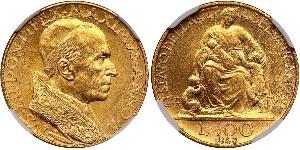
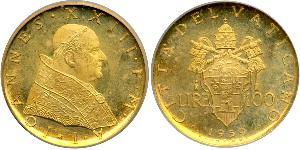
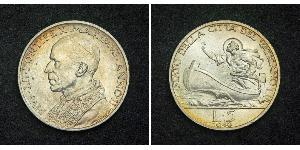
- The Vatican Jubilee Medalles (1983-20th Century):The Jubilee years are when the Holy See releases silver bullion medals. These feature a specific design, often depicting Christ in Majesty or papal portraits on reverse sides with sacred symbols like the Fish and Keys of Peter.
- Pope Leo XIII Commemorative:In 1903 (pre-Vatican State but historically linked) issues were struck for Pope Pius X. In modern times, coins issued in honor of St. Joseph reflect a specific theological devotion within the state's official calendar.
- The Vatican Euro Centenary Series: Focusing on 2016 and later editions where the coin depicts the central square (St Peter's Square), not just generic European symbols, but specifically "Vatican" imagery like the dome of St. Peter seen from specific angles.
We do not list catalog numbers or exact market prices; rather we emphasize why these items are kept in museum cabinets:
- The 20th Anniversary Jubilee (1935): A key early piece that established the standard for papal imagery.
- Bullion Issues:Coinage struck in gold and silver with very high purity content, often used as gifts to cardinals or dignitaries worldwide before becoming public property.
Legado Cultural
The cultural legacy of Vatican coinage is found where the sacred meets the secular. The coins themselves become "portable art."
- Symbols:Vatican reverse designs include artistic images from St Peter's Basilica, specific papal figures, or religious scenes that reflect global history.
- Theological Themes:Ancient symbols like the "fish" (Icthyus) and Chi-Rho are frequently adapted for modern coinage. A 2015 Jubilee Medal features a depiction of St Peter holding his keys; this symbolizes authority granted directly to him by Christ.
This is vital study: Coins reflect the state's values because they often prioritize religious devotion over nationalistic pride found in other countries' mintage. Even when depicting current popes (Pope John Paul II, Benedict XVI, or Francis), coin art focuses on their role as shepherds rather than politicians.
This approach ensures that collecting Vatican coins is an act of studying history and theology simultaneously, not just chasing gold.
Para los Coleccionistas
To the seasoned collector approaching this territory: Remember first what your motivation is. Are you building a portfolio or seeking spiritual connection?
- Distinguish Medals vs Circulation:In modern collecting, "circulating coins" (Vatican Euros) are often less valuable than historical medals issued for papal events. The Holy See issues commemorative gold/silver pieces that function as legal tender.
The Vatican City remains a symbol of sovereignty within the world's heartland. While its physical size is tiny, its numismatic footprint is global and deeply respected due to high artistic standards and consistent theological integrity in production design. For you, collecting these items means holding history that spans millennia.