| vorangegangen von | |
|
|||||||
| Anhalt-Bernburg-Schaumburg-Hoym (1718 - 1812) | |||||||

| gefolgt von |
| Anhalt-Bernburg-Schaumburg-Hoym (1718 - 1812) | Link zur Wikipedia |
Anhalt-Bernburg-Schaumburg-Hoym: History, Coinage and Collectibles
Welcome to the gallery of European fragmentation where the small states defined their own destiny through ink and iron rather than gold or silver alone. Today we examine a fascinating corner of German history known as Anhalt-Bernburg-Schaumburg-Hoym. While it may lack the imperial grandeur of Vienna or Berlin, this principality offers a profound microcosm of how small political entities operated within the vast Holy Roman Empire and later the unified Germany. As your curator for this segment at Hobbyray, I invite you to consider these artifacts not merely as currency for trade, but as tangible witnesses to a time when loyalty was measured in pounds weight rather than votes.
Historical Background
The story of Anhalt-Bernburg-Schaumburg-Hoym is one of survival and division within the fractal landscape of German states. It emerged from the complex political partitions that characterized Central Europe after the Thirty Years' War, a period where large empires fractured into thousands of distinct fiefs. The House of Ascania played a crucial role in shaping this identity, ruling various branches as counts or princes depending on the era's legal status. The lands encompassed were relatively small but strategically located between Thuringia and Saxony.
This geographic position dictated its economic character. Small states like Hoym rarely could support independent standing armies for long periods; instead, they relied heavily on trade networks with larger neighbors such as Prussia and the Kingdom of Hanover. This interdependence is reflected in their social fabric—a blend of peasant agriculture emerging into artisanal town life in centers like Bernburg and Hoym itself.
Cultural identity was preserved through language and religion, shifting from Lutheran strictures to a more tolerant environment by the late 18th century as Enlightenment ideals spread. The rulers sought prestige not always through expansion but through patronage of local arts and education. This internal stability allowed their government to maintain control over economic policies that would eventually lead them into financial difficulties common among German principalities facing rising inflation.
Currency and Coinage History
In the world where Anhalt-Bernburg-Schaumburg-Hoym existed, money was a tool of sovereignty. For centuries, the region participated in the imperial monetary system that governed most of Germany before 1871. Silver served as the standard for large transactions like land purchases and merchant payments, while copper handled daily wages.
The evolution of their coinage mirrors the broader political shifts. Early issues often adopted models from larger powers to save on minting costs, but they eventually developed distinct types that carried local identity. When Prussian hegemony grew strong in the early 19th century after Napoleonic wars, pressure mounted for all small states to standardize with the Thaler of Berlin or Vienna.
Economic stability fluctuated based on grain harvests and toll revenues from rivers like the Saale. The minting authority had to carefully manage silver content because devaluation threatened international reputation among merchants. This careful balancing act kept their local coinages in circulation longer than might be expected for a minor principality.
Mints and Coin Production
Due to its diminutive size, the region did not maintain massive mint complexes of France or England. Instead, production centers were often small workshops established within major towns or outsourced under contract with larger imperial mints during times of need. Despite limited capacity, quality remained high because maintaining local prestige was essential for commerce.
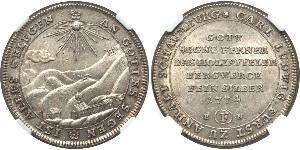
Coinage traditions reflected the Baroque style that dominated European design from 1700 to 1800. Portraits were stylized but dignified; the ruling count or prince wore crowns appropriate to their rank within the German hierarchy. Engravers worked with limited resources, often reusing reverse designs for different denominations of silver currency rather than commissioning new art pieces.
The artistic characteristics distinguish these issues from neighboring states through specific heraldic usage. The black eagle on a white shield was common in Germany, but the way it faced or held objects varied by ruler’s personal preference. Copper coins featured intricate patterns like wreaths to add aesthetic value before melting them for silver bullion when necessary.
Notable Coins
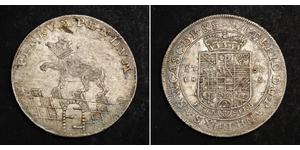
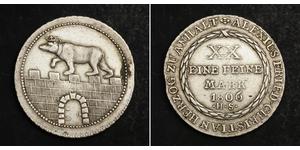
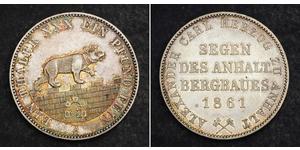
The most cherished pieces for enthusiasts are found within their principal denominations: the Thaler and its fractional counterparts. The Thalers were struck in quantities large enough that some remain available today, though often with heavy wear due to centuries of circulation. These coins bore royal portraits alongside coats of arms.
- The Silver Half-Guldens: These are significant because they represent the transition period where local currency competed or coexisted with Prussian standards. Collectors prize them for their mint mark variations and slight design changes that occur every few years under new regents.
- Copper Pfennigs: Though less common in high-end collections, these small coins are vital to understanding daily life costs during the 18th century.
Rarer silver pieces exist from specific reigns before full annexation into larger states. These were often struck in smaller quantities due to rising taxes or war financing which forced rulers to recall circulating coinage and replace it with paper money earlier than expected.
Cultural Legacy
The legacy of Anhalt-Bernburg-Schaumburg-Hoym is not just political; it lives within the metal itself. Every engraving on a silver piece from this region tells stories of piety, loyalty to family names, and devotion to German traditions that transcended modern borders.
In an era where religious tolerance was debated across Europe, these coins often display inscriptions honoring peace or charity in addition to ruling titles. This reflects the cultural priorities of local clergy who advised ducal courts on moral governance standards suitable for small states under divine guidance. The transition from silver bullion-based economies into industrialized trade also shaped how wealth moved between cities.
Heraldry plays a central role here; as territories merged, old symbols were folded into new designs. Collectors can trace lineage changes through these changing badges of office. This makes the coins historical documents that map family trees and territorial shifts better than many written records from peasant communities where literacy rates remained lower.
For collectors
The importance today lies in preserving a piece of German history before modern nation-states erased it from maps entirely. Collectors should understand that these issues represent the final days of absolute sovereignty for tiny duchies within Europe prior to unification movements and war restructurings.
- Rarity Factor: Scarcity comes often from mint errors or post-reign recall rather than low population size which usually produced massive quantities.
Preservation involves proper storage for copper pieces prone to oxidation and careful cleaning of silver items that may have lost original patina. For auction buyers, the context matters just as much as condition; knowing exactly how many years a coin existed under its current ruler helps contextualize value.
This principality remains an important chapter in European numismatics because it represents the diversity that vanished with unification movements across Europe during the 19th century. Owning these artifacts is akin to holding history books written by metal workers rather than scholars alone. They remind us of a time when geography dictated economics, culture influenced currency design, and small states found their place in vast continental narratives.