| Смотреть |
| предшественники | |
|
|||||||||||
 Duchy of Mecklenburg-Schwerin (1352-1918)
|
|||||||||||


| последователи |
| Duchy of Mecklenburg-Schwerin (1352-1918) | Ссылка на Википедию |
Mecklenburg-Schwerin: History, Coinage and Collectibles
Welcome to a curated look at the numismatic heritage of Mecklenburg-Schwerin. This territory occupies a unique space in history as one of Germany’s oldest ruling lines that maintained its distinct identity within an empire for centuries. Today we stand before you is not merely metal and ink; it is a tangible record of political evolution, economic stability, and artistic expression spanning from the Hanseatic League era through the dissolution of European monarchies.
Historical Background
The narrative begins in Northern Germany along the coast where trade winds shaped destiny. The region was historically part of the Duchy of Mecklenburg, which eventually bifurcated into three principalities under a single lineage by 1701: Mecklenburg-Schwerin. For collectors seeking depth beyond silver and gold, it is crucial to understand that this was not just a state, but an estate ruled with the prestige of high nobility.
The capital city of Schwerin grew alongside its sister port at Rostock into major centers of commerce within the Hanseatic League. This economic integration brought prosperity based on maritime trade and timber export to Sweden and Norway. The stability provided by this wealth allowed for cultural patronage, fostering a tradition where local dukes commissioned art, architecture, and coins that rivaled their southern counterparts in quality.
The region’s history is defined by its struggle between maintaining autonomy as an independent Duchy within the German Confederation and joining Prussia to form Germany. This dynamic tension permeates every coin minted during this period. When you hold a coin of Mecklenburg-Schwerin, you are holding evidence of a state that cherished its independence while participating in national unity.
Culturally, the region was renowned for its aristocratic lifestyle and educational institutions like Rostock University, which attracted thinkers from across Europe. This intellectual climate influenced local coin designs to be more refined than those of many industrial neighbors during the mid-19th century. The coat of arms featuring a crowned lion became synonymous with the House of Mecklenburg’s identity.
Currency and Coinage History
The monetary story is one of transition, moving from local feudal currencies to standardized imperial coins while retaining regional distinctiveness where possible.
- Feudal Silver: Early in their history, the ruling dukes minted silver pieces based on thaler standards used across Northern Europe. These were heavy denominations intended for large transactions but also served as a display of sovereign power at local fairs and markets.
- The Copper Reforms: As commerce modernized into the 19th century, copper coins became necessary for small change in rural areas and town exchanges. The transition to standardization under German economic reforms meant that Mecklenburg had to align its denominations with Prussian standards.
- The Imperial Era: Following unification in 1871, the goldmark replaced regional silver currencies for high-value transactions. However, copper coins were often minted locally or at local mints bearing their coat of arms on the reverse side to preserve a sense of regional continuity amidst standard national designs.
Mints and Coin Production
The production of coinage in this region was characterized by high standards. While smaller states often relied upon larger Prussian mints, Mecklenburg maintained its own minting capacity to ensure the quality reflected the prestige of the Duchy.
Artistically, these coins are distinguished by their heavy use of heraldry and local geography. Unlike modern industrial issues that prioritize efficiency over artistry, the historical coins here often feature detailed depictions of castles or crowns. The metalwork is typically solid with minimal planed-down surfaces in later periods.
The transition from traditional die-striking to machine production occurred gradually during the late 19th century. This shift allowed for higher mintage numbers but introduced new design challenges: how do you keep a regional identity alive when standardizing national imagery? The answer is found on copper issues, where artists incorporated Mecklenburg-specific symbols alongside the imperial eagle.
Notable Coins
To appreciate this collection history, one must look at three specific types that stand out for their historical context and design merit:
- The Silver Thaler Transition Pieces:
- Historical Context: Struck before 1873, these represented a moment of change from independent sovereignty to federal currency.
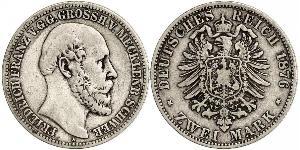
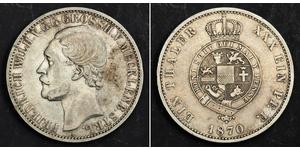
- Design Features: They often bear the profile of regional rulers alongside heraldic shields. The silver purity varies significantly based on economic conditions at the time of issue.
- Collector Importance:
- The Copper 10 Pfennig Issues:
- Historical Context: These were the bread and butter of daily commerce for rural farmers during the late Empire era. They are where local identity remained strongest in a nation increasingly driven by industrial standardization.
- Design Features:
- Collector Importance:
- The Gold Mark Commemoratives:
- Historical Context: Struck occasionally for official visits or jubilees of the ruling dukes, these pieces are distinct from standard circulation coins found elsewhere.
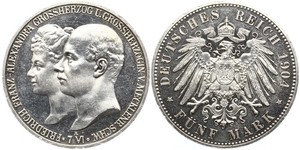
- Design Features: These typically feature high-relief portraits and intricate engraving around the borders that highlight the craftsmanship available to regional states even under federal oversight.
- Collector Importance:
Cultural Legacy
The coinage of Mecklenburg-Schwerin is more than currency; it was a cultural artifact that reflected the values of its inhabitants. The emphasis on heraldic symbols like the crowned lion reinforced loyalty to the House of Mecklenburg during times when political unity with Prussia or Austria varied significantly.
The art style evolved alongside European trends, but often retained local elements such as floral motifs found in northern German tapestry traditions rather than purely classical Roman styles seen further south. This demonstrates that even under imperial rule, regional distinctiveness persisted through the imagery stamped into metal currency available to every citizen.
For Collectors
Taking possession of a piece from this era invites an appreciation for how history is preserved in everyday objects. For those studying monetary evolution, these coins show that local autonomy did not necessarily mean economic isolation; rather it meant finding creative ways to stamp regional pride onto standardized currency.
The historical significance remains important today because each coin offers access into the lives of farmers and merchants who operated within a complex geopolitical framework without understanding its intricacies. For auction buyers or enthusiasts, these pieces offer a chance to own a fragment of one of Germany's oldest ruling traditions before their final integration into modern borders.
The legacy continues through educational institutions that use these artifacts as primary sources for teaching history and numismatics alike. Understanding the coinage of this region enriches our understanding not just of German history, but of how smaller states navigated the rise of nationalism in Europe at a time when their fate rested on treaties between powerful neighbors.