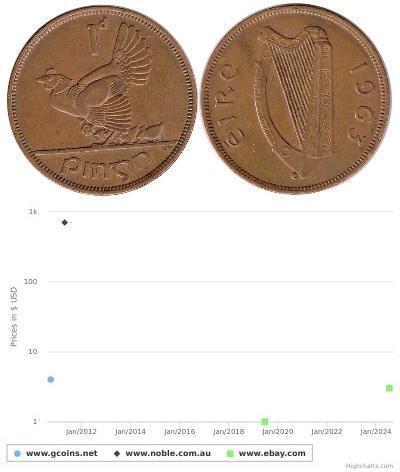
Silver Kopeck monetary unit
| View | Edit |
The Kopeck (also spelled as Kopek or Kopiejka) is a historical and current monetary unit used in various countries, primarily in Eastern Europe and parts of the former Soviet Union. The Kopeck has undergone several variations in terms of its material, denominations, and designs across different regions. Here are some notable variants of the silver Kopeck:
Russian Empire:
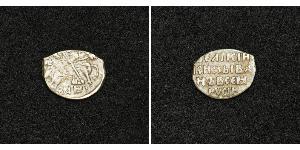
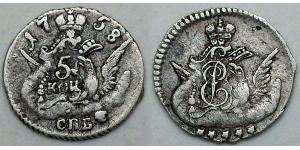
In the Russian Empire, the Kopeck was the smallest denomination of currency and was minted in silver during the early period of its usage. These silver Kopecks were issued in various designs and denominations, including 1 Kopeck, 2 Kopecks, 3 Kopecks, and so on.
The designs typically featured the Imperial Russian coat of arms or the profile of the ruling monarch on the obverse and the denomination and mintmark on the reverse.
Soviet Union:
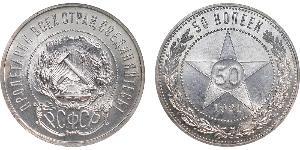
After the Russian Revolution in 1917, the Soviet Union continued to use the Kopeck as its currency. Initially, silver coins were still minted, but due to economic challenges and the transition to a socialist economy, base metal alloys became more common.
Soviet-era Kopecks were often minted in copper-nickel or aluminum-bronze alloys, with designs featuring socialist symbols, portraits of communist leaders, and industrial or agricultural motifs.
Post-Soviet States:
Following the dissolution of the Soviet Union in 1991, many of the newly independent states continued to use the Kopeck as their currency, albeit with variations in designs and denominations.
Some countries, such as Russia and Belarus, continued to issue Kopecks in base metal alloys, while others, such as Ukraine and Moldova, transitioned to using lower denominations of their respective currencies (hryvnia and leu) for everyday transactions.
Designs of post-Soviet Kopecks varied widely and often featured national symbols, historical figures, and cultural motifs relevant to each country.
Collectible and Commemorative Kopecks:
Throughout history, various commemorative and collectible Kopecks have been issued for special occasions, anniversaries, and events. These coins often feature unique designs, precious metal compositions (such as silver or gold), and limited mintages, making them highly sought after by collectors.
Overall, the silver Kopeck has a rich history and has played an important role in the monetary systems of many countries in Eastern Europe and the former Soviet Union. While its usage has evolved over time, the Kopeck remains a symbol of cultural and historical significance in the region.
You may be interested in following coins
2026-08-16
- Historical Coin Prices
2026-08-21
- Historical Coin Prices