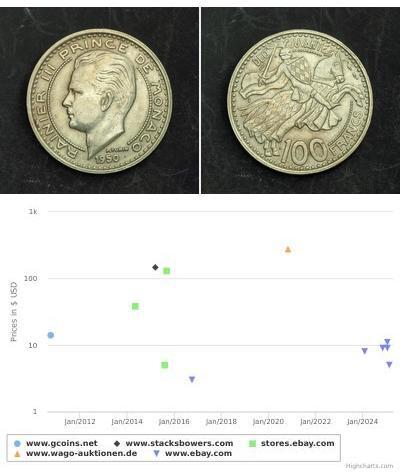
Origin of name for Pfennig monetary unit
| View | Edit |
The name "Pfennig" for the monetary unit has its origins in Germanic languages, particularly Old High German. The word "Pfennig" (plural: Pfennige) translates to "penny" in English.
The Pfennig was originally a small silver coin used in the Holy Roman Empire and other German-speaking regions during the Middle Ages. It was often subdivided into smaller units, such as the Heller or the Kreuzer.
The word "Pfennig" itself derives from the Old High German word "pfenning," which means "to pound" or "to strike." This likely reflects the method of minting coins by striking metal with a hammer.
Over time, the Pfennig became a standard unit of currency in German-speaking territories, with various denominations and designs reflecting the political and economic changes in the region. It remained in use until the introduction of the euro as the official currency in many European countries, including Germany, in the late 20th and early 21st centuries.
Despite no longer being in circulation, the term "Pfennig" continues to be used colloquially in German-speaking countries to refer to small amounts of money or as a general term for currency.
You may be interested in following coins
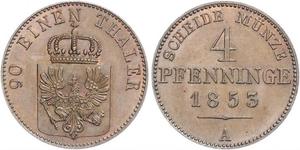
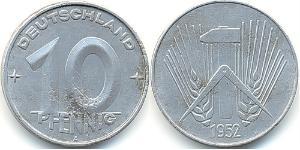
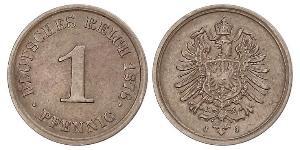
2026-09-15
- Historical Coin Prices
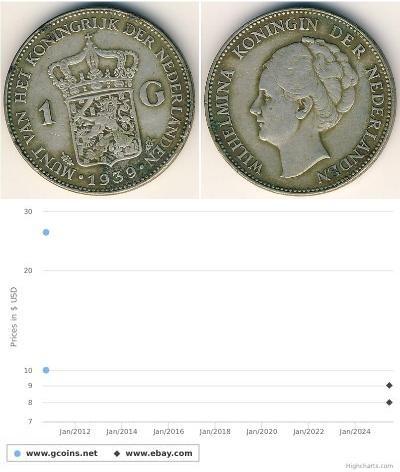
2026-09-18
- Historical Coin Prices