| Heinrich XX, Prince Reuss of Greiz | Ссылка на Википедию |
Heinreich XX, Prince Reuss of Greiz (1794-1859): History and Coinage
The Life of a German Sovereign
Heinrich XX served as the ruling monarch of the principality of Reuss-Greiz during one of the most transformative periods in European history. Born at Offenbach within Hesse-Darmstadt, he succeeded his brother upon his passing in 1836 after a lineage governed by strict Salic laws excluded females from direct succession. Throughout his reign, Heinrich XX maintained administration based on absolutist principles until external revolutionary pressures forced the state to consider constitutional reform around 1848. Although these documents never came into full force during his lifetime, he distinguished himself as a capable military officer serving with distinction in favor of the Austrian Empire. He passed away in Greiz at age sixty-five in 1859, marking the end of an era where small German states retained distinct political identities amidst rising nationalism.
Coinage and Political Legitimacy
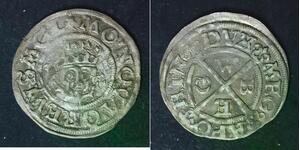
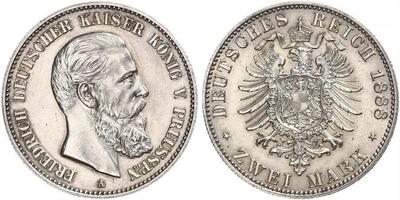
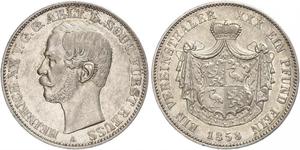
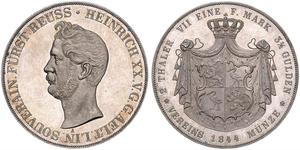
In this historical context, currency played a vital role not only as economic tool but also as an assertion of sovereignty. The principality issued coins during the reigns of Heinrich XX to facilitate local trade among German cities that had yet to consolidate into modern federal structures before unification occurred later in 1870s. These issues were typically sovereign, carrying marks identifying Reuss-Greiz alongside specific portraits or monograms denoting the ruler’s authority over his territory and subjects. The portrait of Heinrich XX on coinage was designed during times when political stability required constant demonstration of legitimacy against both revolutionary governments and larger regional powers like Prussia or Austria.
The Collector's Perspective
Coin collectors are drawn to pieces from this period for their connection to a complex era where hundreds of micro-states existed side by side with major empires. While less common than imperial issues, these sovereigns provide tangible links to specific noble lineages and the economic reality of Central Europe prior to modern statehood. The rarity found in numismatics stems largely from small mintings that were often circulated locally rather than across international borders where they might have been preserved by museums or larger collections today.
Narrative Value for Enthusiasts
Educational value is a primary draw, as every piece allows enthusiasts to explore how aristocratic families exercised control over economic matters before centralization removed their independence. These artifacts help illustrate the transition from decentralized monarchy toward modern federalism, preserving memory about individuals like Heinrich XX who shaped historical events through administrative decisions and military service despite limited global recognition.