


| Frederick Augustus, Prince of Anhalt-Zerbst(1734 – 1793) | Link to Wikipedia |
Frederick Augustus, Prince of Anhalt-Zerbst (1734–1793): History and Coinage
Frederick Augustus stands as a notable figure in 18th-century German history, representing the House of Ascania within the small but politically significant Principality of Anhalt-Zerbst. Born into nobility at Alt Stettin, he was not only the last sovereign ruler before his family line went extinct but also held a unique familial bond to broader European events through his sister, Catherine II of Russia.
Sovereignty and Currency
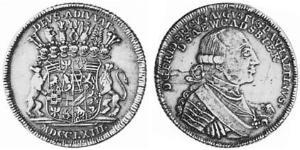
In the numismatic world, currency serves as the primary record of political authority. During Frederick Augustus's rule from Zerbst, coins were struck locally to affirm sovereignty within the Holy Roman Empire structure. While smaller German principalities often relied on larger neighbors for minting oversight or imperial standards, local mints occasionally issued silver thalers and half-thaler pieces bearing the arms or portraits of their rulers.
The portrait or name placed on coinage was not merely decorative; it was a political declaration against neighboring powers like Prussia. When Frederick Augustus supported Britain during the American Revolutionary War by sending soldiers, these actions were controversial yet financially rewarded through compensation and diplomatic standing that occasionally influenced currency design choices in sovereign states of his region. Following exile to Basel after conflicts with Prussia, coins issued later reflect the changing political landscape as he sought protection from other European powers until passing away in Luxembourg.
Rarity for Collectors
The primary driver behind collector interest is rarity stemming directly from historical extinction. The line of Anhalt-Zerbst ended upon Frederick Augustus's death, with the territories eventually divided and ceased to exist by 1796.
- Rarity due to Line Extinction: Coins minted during his reign before partition are scarce in private collections compared to larger German principalities like Saxony or Prussia.
- Educational Connection: These pieces help students of numismatics understand the complexities of Imperial Germany, where small states held currency rights despite limited territory and political influence abroad.
- Historical Events: Collectors value these artifacts for their association with significant global history, specifically Frederick Augustus's role in supporting American revolutionary forces under controversial European imperial policy.
For those building specialized German numismatic collections, examining pieces from this period offers insight into the transition of small states before unification. Whether seeking a piece bearing the Anhalt coat of arms or exploring the rare later issues that acknowledge his status in exile, these coins provide tangible links to the final moments of an independent family line.


